
CKnowing what your policy excludes is just as critical as knowing what it covers. Standard HO-3 policies are broad, but they have clear boundaries, and those boundaries tend to show up at the worst possible times.
Natural Disasters: Why Flood and Earthquake Coverage Are Separate
Standard homeowners policies do not cover flood damage or earthquake damage. Period. This is non-negotiable across virtually every carrier in the market.
For South Carolina homeowners, especially those along the coast from Myrtle Beach to Charleston, flood insurance isn't optional: it's essential. Even homes outside FEMA-designated flood zones can flood. About 25% of flood claims come from properties in low-to-moderate risk areas. You can purchase flood coverage through the National Flood Insurance Program (NFIP) or through private carriers, and an independent agency can compare both options to find the best fit for your risk profile and budget.
Earthquake coverage matters more than most South Carolinians realize, too. The Charleston area sits near a historically active seismic zone, and earthquake endorsements are relatively affordable compared to the potential loss.
Maintenance Issues vs. Sudden and Accidental Damage
Your policy draws a hard line between sudden, accidental damage and gradual deterioration. A pipe that bursts unexpectedly and floods your bathroom? Covered. A pipe that's been slowly leaking for months, rotting your subfloor? That's a maintenance issue, and your insurer will deny the claim.
This distinction trips up homeowners constantly. Mold that develops from a long-ignored leak, termite damage, foundation settling, and roof wear from age are all considered maintenance responsibilities. The logic is straightforward: insurance is designed for unexpected events, not predictable upkeep. Service line coverage is one endorsement worth considering, as it protects underground utility lines running to your home that standard policies typically exclude.
Opening a business in South Carolina comes with plenty of excitement and a fair amount of paperwork. Between choosing a business structure, securing permits, and finding your first customers, insurance requirements can feel like just another box to check. But getting this wrong can mean fines, lawsuits, or losing everything you've built. The state doesn't require a long list of policies, but the ones it does mandate carry real consequences if you skip them. And the coverage South Carolina doesn't require? Some of it is just as critical to your survival.
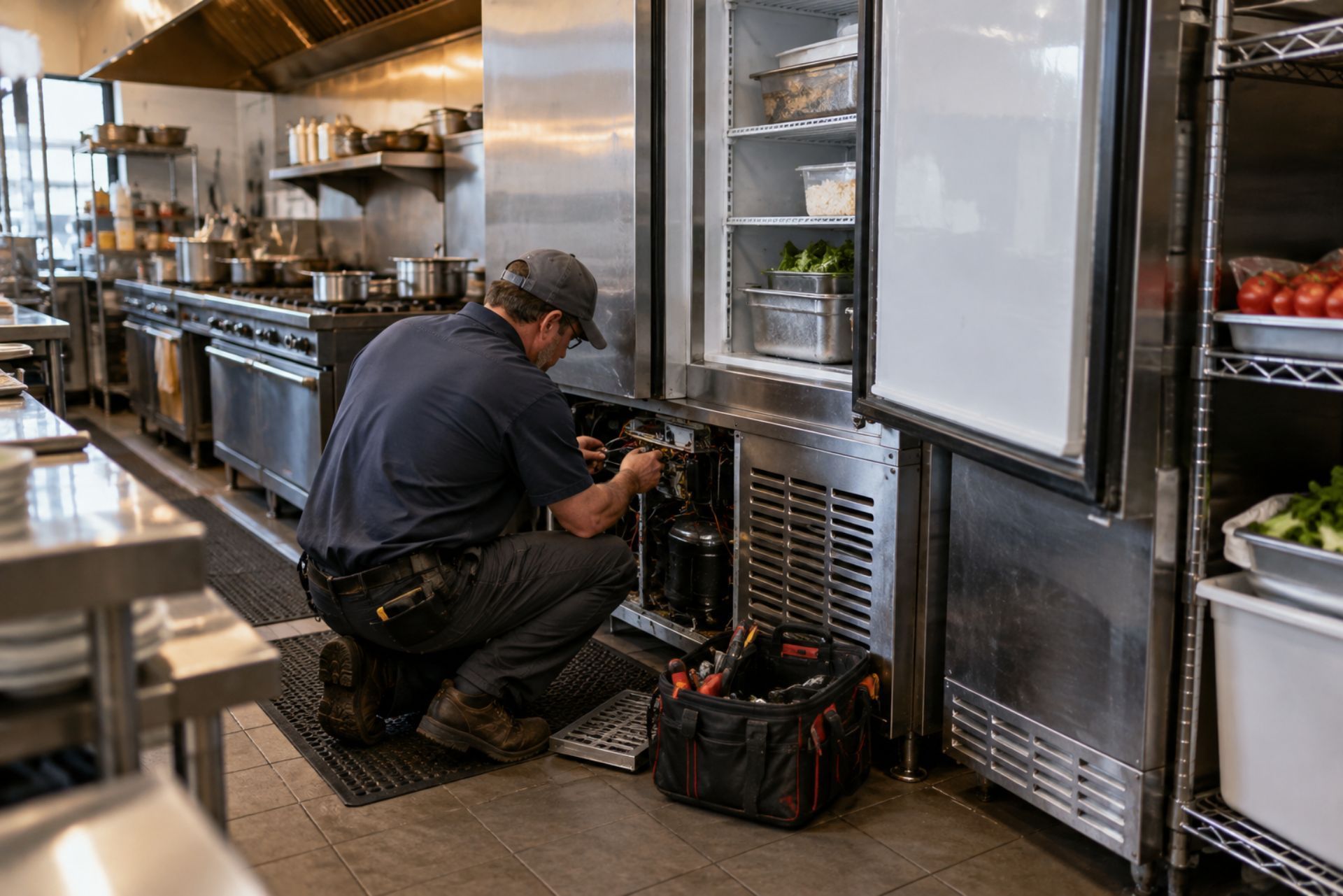
Whether you're running a restaurant in Florence, a contracting company in Columbia, or a retail shop near Myrtle Beach, the insurance you legally need depends on your employees, your vehicles, and your industry. What most business owners don't realize is that the legal minimums only scratch the surface. A single liability claim or property loss can wipe out a business that's technically "compliant" but dangerously underinsured.
Here's a practical breakdown of what South Carolina law actually requires, what you should strongly consider beyond those requirements, and how to figure out the right coverage for your specific situation.
South Carolina Mandated Business Insurance Coverage
South Carolina keeps its mandatory insurance requirements relatively simple compared to states like California or New York. The state primarily focuses on two areas: protecting employees who get hurt on the job and ensuring business vehicles carry adequate liability coverage. That said, "simple" doesn't mean "optional." The South Carolina Workers' Compensation Commission and the Department of Insurance both enforce these requirements, and penalties for non-compliance can be severe.
One thing that trips up new business owners: South Carolina doesn't require general liability insurance by law. That surprises people, but it's true. The state mandates coverage in specific situations rather than applying blanket requirements to every business. Your obligations depend on how many people you employ and whether you operate vehicles for business purposes.
Workers' Compensation for Four or More Employees
South Carolina law (Title 42 of the SC Code of Laws) requires workers' compensation insurance for any business with four or more employees. This applies regardless of whether those employees are full-time, part-time, or seasonal. The moment you hit that four-employee threshold, you need a policy in place.
There's an important exception: construction businesses must carry workers' comp with even one employee. South Carolina treats the construction industry differently because of the inherently higher injury risk. If you're a general contractor, subcontractor, or any construction-related operation, there's no employee minimum.
Workers' comp covers medical expenses, lost wages, and rehabilitation costs for employees injured on the job. It also protects you from being sued directly by the injured worker in most cases, which is a benefit business owners often overlook. Premiums vary based on your industry classification, payroll size, and claims history. A small office-based business might pay $0.20 per $100 of payroll, while a roofing company could pay $15 or more per $100.
Commercial Auto Insurance for Business Vehicles
Any vehicle titled or registered to your business must carry commercial auto insurance. South Carolina's minimum liability limits for commercial vehicles follow the same 25/50/25 structure as personal auto: $25,000 per person for bodily injury, $50,000 per accident for bodily injury, and $25,000 for property damage. These are state minimums, and most insurance professionals will tell you they're dangerously low for business use.
If an employee causes an accident in a company vehicle and the damages exceed your policy limits, your business assets are on the line for the difference. A serious accident with injuries can easily generate claims of $100,000 or more, which blows past the state minimum in a hurry. Most agents recommend at least 100/300/100 limits for commercial vehicles, with an umbrella policy on top.
One common mistake: assuming your personal auto policy covers you when you use your car for business. It usually doesn't, and we'll address that in the FAQ below.
Comparing State Requirements vs. Essential Protections
The gap between what South Carolina legally requires and what a small business actually needs is significant. Legal compliance keeps you out of trouble with the state, but it won't necessarily keep your doors open after a lawsuit, a fire, or a customer injury on your premises.
Comparison Chart: Legally Required vs. Highly Recommended Coverage
| Coverage Type | Legally Required? | Who Needs It | What It Covers |
|---|---|---|---|
| Workers' Compensation | Yes (4+ employees; 1+ in construction) | Employers meeting threshold | Employee injuries, medical costs, lost wages |
| Commercial Auto | Yes (business-titled vehicles) | Any business with company vehicles | Liability for accidents involving business vehicles |
| General Liability | No (but often contractually required) | Nearly every business | Third-party injuries, property damage, advertising claims |
| Professional Liability (E&O) | Sometimes (licensed professions) | Consultants, healthcare, accountants, attorneys | Errors, omissions, malpractice claims |
| Commercial Property | No (but required by lenders) | Businesses with physical locations or equipment | Building damage, equipment loss, inventory |
| Business Owner's Policy (BOP) | No | Small to mid-size businesses | Bundles general liability + property at lower cost |
| Cyber Liability | No | Businesses handling customer data | Data breaches, ransomware, notification costs |
| Flood Insurance | No (but critical in coastal SC) | Businesses in flood zones | Flood damage (excluded from standard property policies) |
A business owner's policy, or BOP, is often the most cost-effective way to cover the essentials. It bundles general liability and commercial property into a single policy at a lower premium than buying them separately. For small businesses in South Carolina, a BOP is usually the foundation that everything else builds on.
If your business is located in a coastal area like Myrtle Beach or Charleston, flood insurance deserves serious attention. Standard commercial property policies exclude flood damage entirely, and FEMA flood maps have been updated several times in recent years, expanding risk zones inland.
Industry-Specific Insurance Obligations
Beyond the universal requirements, certain industries in South Carolina face additional insurance mandates tied to professional licensing or regulatory compliance.
Professional Liability for Licensed Practitioners
South Carolina requires or strongly encourages professional liability insurance for several licensed professions. Healthcare providers, including physicians, dentists, and chiropractors, must carry malpractice coverage to maintain their licenses. Attorneys aren't technically required to carry it, but the SC Bar strongly recommends it, and many clients and firms require it contractually.
Accountants, engineers, architects, and real estate professionals also face professional liability expectations, either through licensing boards or through the contracts they sign with clients. A single claim of negligent advice or a missed deadline can generate six-figure legal costs, even if you did nothing wrong. The cost of defending yourself alone makes this coverage essential for any licensed professional.
Liquor Liability for Hospitality and Retailers
If your business serves or sells alcohol in South Carolina, you need liquor liability insurance. South Carolina's dram shop laws (SC Code Section 61-2-145) can hold your business liable if you serve alcohol to a visibly intoxicated person who then causes injury or death. This exposure is real and expensive.
Restaurants, bars, breweries, event venues, and even retail stores with beer and wine permits should carry this coverage. Standard general liability policies typically exclude alcohol-related claims, so you need a separate endorsement or standalone liquor liability policy. Premiums depend on your alcohol sales volume, but a small restaurant might pay $500 to $2,000 annually for this protection.
Common Questions About SC Business Insurance
Do I need insurance if I work alone from home?
South Carolina doesn't require sole proprietors with no employees to carry business insurance. That said, your homeowner's policy almost certainly excludes business activities. If a client visits your home office and gets injured, or if business equipment is stolen, your personal policy likely won't cover it. A home-based business endorsement or a small BOP can fill that gap for a few hundred dollars a year.
What happens if I don't carry workers' comp in SC?
The SC Workers' Compensation Commission can impose penalties of up to $100 per day for each day you operate without required coverage. You can also be held personally liable for any employee injuries, meaning your personal assets are at risk. In extreme cases, the state can issue a stop-work order, shutting down your operations entirely until you obtain a policy.
Does my personal car insurance cover business deliveries?
Almost never. Most personal auto policies exclude coverage during commercial use. If you're delivering products, driving to client sites regularly, or using your car for any business purpose beyond a normal commute, you need either a commercial auto policy or a business-use endorsement on your personal policy. A gap here could leave you completely uninsured during an accident.
How much does a basic small business policy cost in SC?
A basic BOP for a low-risk business in South Carolina typically runs between $500 and $1,500 per year. Workers' comp adds anywhere from a few hundred to several thousand dollars depending on your industry and payroll. An independent agency like CSP Insurance Services can compare quotes from multiple carriers to find the most competitive rate for your specific situation, which often saves 15-30% compared to going directly to a single carrier.
Are LLCs required to have more insurance than sole proprietorships?
No. South Carolina doesn't impose different insurance requirements based on business structure. An LLC with four employees has the same workers' comp obligation as a sole proprietorship with four employees. The LLC structure does provide personal liability protection, but it won't shield you from everything. Insurance fills the gaps that your business structure can't.
Factors That Influence Your SC Coverage Needs
Your insurance needs aren't static. They shift as your business grows, adds employees, takes on new contracts, or moves into different service areas. Several factors specific to South Carolina shape what you should carry.
Location matters enormously. A business operating on the coast faces hurricane, wind, and flood exposure that an identical business in Rock Hill simply doesn't. Your property insurance premiums will reflect this, and you may need separate wind and hail or flood policies that wouldn't be necessary inland.
Contract requirements often dictate coverage more than state law does. If you're a subcontractor bidding on commercial projects, the general contractor will almost certainly require you to carry general liability with minimum limits of $1 million per occurrence and $2 million aggregate. Government contracts frequently require even higher limits. Without the right certificates of insurance, you won't win those bids.
Your industry classification affects both your requirements and your costs. A tech consulting firm has very different exposure than a landscaping company. The SIC and NAICS codes assigned to your business determine your workers' comp rates, and they influence which coverages an underwriter considers essential. Working with an experienced agency that understands South Carolina's market, like CSP Insurance Services with their 80-plus years of industry knowledge, helps ensure you're properly classified and not overpaying for coverage you don't need.
Revenue and payroll growth trigger changes too. Crossing the four-employee threshold means you need workers' comp. Adding a delivery vehicle means you need commercial auto. Hitting certain revenue milestones might mean your current policy limits are no longer adequate. Review your coverage annually, or whenever your business hits a significant milestone.
Your Next Steps for Compliance
Figuring out what insurance your South Carolina small business legally needs is only the starting point. The real question is what coverage keeps your business protected against the risks you actually face, not just the ones the state tells you to worry about.
Start by confirming whether you meet the workers' comp threshold and whether any vehicles need commercial auto coverage. Those are your non-negotiable legal requirements. From there, evaluate your exposure: Do you interact with the public? Do you handle sensitive data? Are you in a flood zone? Do contracts require specific coverage?
An independent agency can run quotes across multiple carriers and help you identify gaps you might not see on your own. CSP Insurance Services works with businesses across South Carolina, from manufacturers in the Upstate to restaurants along the Grand Strand, tailoring coverage to each operation's actual risk profile rather than selling a one-size-fits-all package. Reach out to their team directly for a personalized review of your coverage needs. Getting this right now is far cheaper than finding out you're underinsured after a claim.
About the author
Lawson Walker, CIC
I'm proud to be part of an agency that's served Florence since 1939. CSP Insurance Services started as Cormell-Streett & Patterson, built by people who believed insurance should be personal — and more than eight decades later, that conviction still drives everything we do. Commitment, Service, Protection isn't just what CSP stands for; it's how I approach every client relationship.
As an independent, Trusted Choice agency, we aren't tied to any single carrier. That means I work for you — shopping multiple companies to match you with coverage that actually fits your family, your business, and your budget. No call centers, no chatbots. Just a local expert who takes the time to understand what matters to you and stands by you when it counts.
Whether you're protecting your home, your car, or a business you've spent years building, I'd be glad to help you find the right coverage.
Recent Posts