

CSP Insurance Services was founded in 1939, when Clifford Cormell joined Earnest Streett to sell insurance in Florence. More than 80 years later, we still answer the phone ourselves. No call centers, no chatbots — just a local team that knows your name and your policy.
We compare several carriers to find a policy that fits you, not one company's products.
◆
80+ years local experience
Hospital bills, treatment, and prescriptions for a work-related injury or illness.
Medical expenses
Claims history
Commercial Property for Specialized Equipment
A standard property policy covers your building (if you own it), furniture, and general inventory. But hearing aid centers have specialized equipment that needs proper valuation: audiometers, tympanometers, real-ear measurement systems, and programming hardware can easily total $50,000 to $100,000 or more.
Make sure your property policy covers replacement cost rather than actual cash value. A five-year-old audiometer that cost $15,000 new might have a depreciated value of $5,000, but replacing it still costs $15,000. South Carolina coastal practices should also pay attention to wind and hail exclusions, which are common in standard policies near Myrtle Beach and other coastal areas. You may need a separate windstorm policy through the SC Wind and Hail Underwriting Association.
A restaurant owner in Myrtle Beach watches a summer thunderstorm roll in and wonders whether her policy actually covers the roof damage she's been worrying about since last hurricane season. A manufacturer in Florence just signed a lease on a second warehouse and has no idea how much coverage he needs. A nonprofit in Columbia is running on a shoestring and isn't sure whether commercial property insurance is even required by law. These are the kinds of real, specific questions South Carolina business owners face every year, and the answers aren't always obvious. Getting commercial property coverage right in this state means understanding not just what a standard policy does, but how South Carolina's geography, regulations, and weather patterns shape the coverage you actually need.
This guide breaks down the coverage types, state requirements, coastal risk factors, policy limits, and valuation methods that matter most for South Carolina businesses in 2026.
Understanding Commercial Property Insurance in South Carolina
Commercial property insurance protects the physical assets your business depends on: the building you own or lease, the equipment inside it, your inventory, and sometimes even the income you lose when a covered event shuts you down temporarily. It's the financial backstop that keeps a single fire, storm, or burst pipe from wiping out years of work.
South Carolina businesses face a distinct set of risks that make this coverage especially critical. The state's long coastline, its exposure to hurricanes and tropical storms, and its humid climate create hazards that businesses in, say, Ohio simply don't deal with. That reality affects everything from the deductibles you'll see on your policy to the endorsements you'll need to add.
What It Covers: Buildings, Equipment, and Inventory
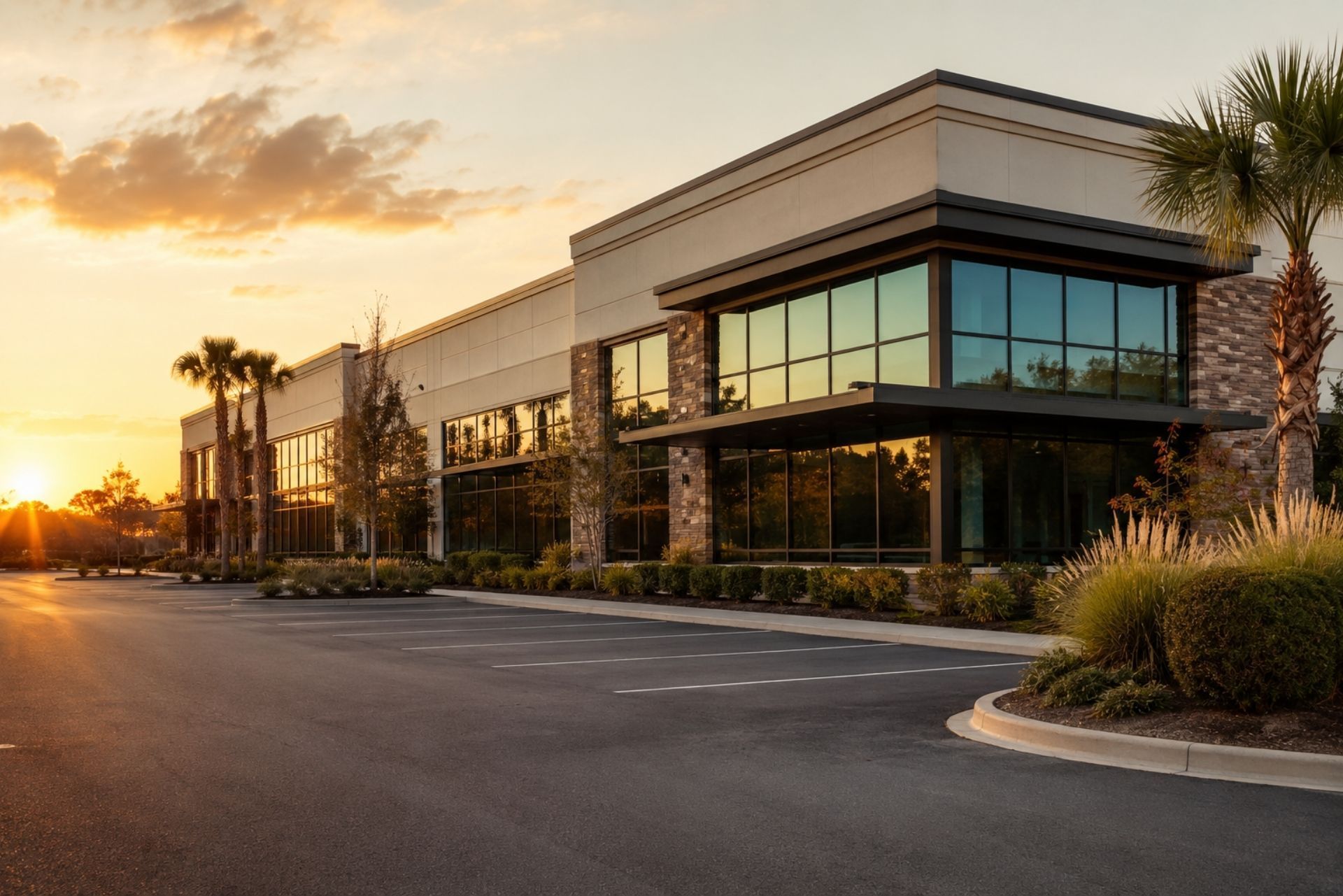
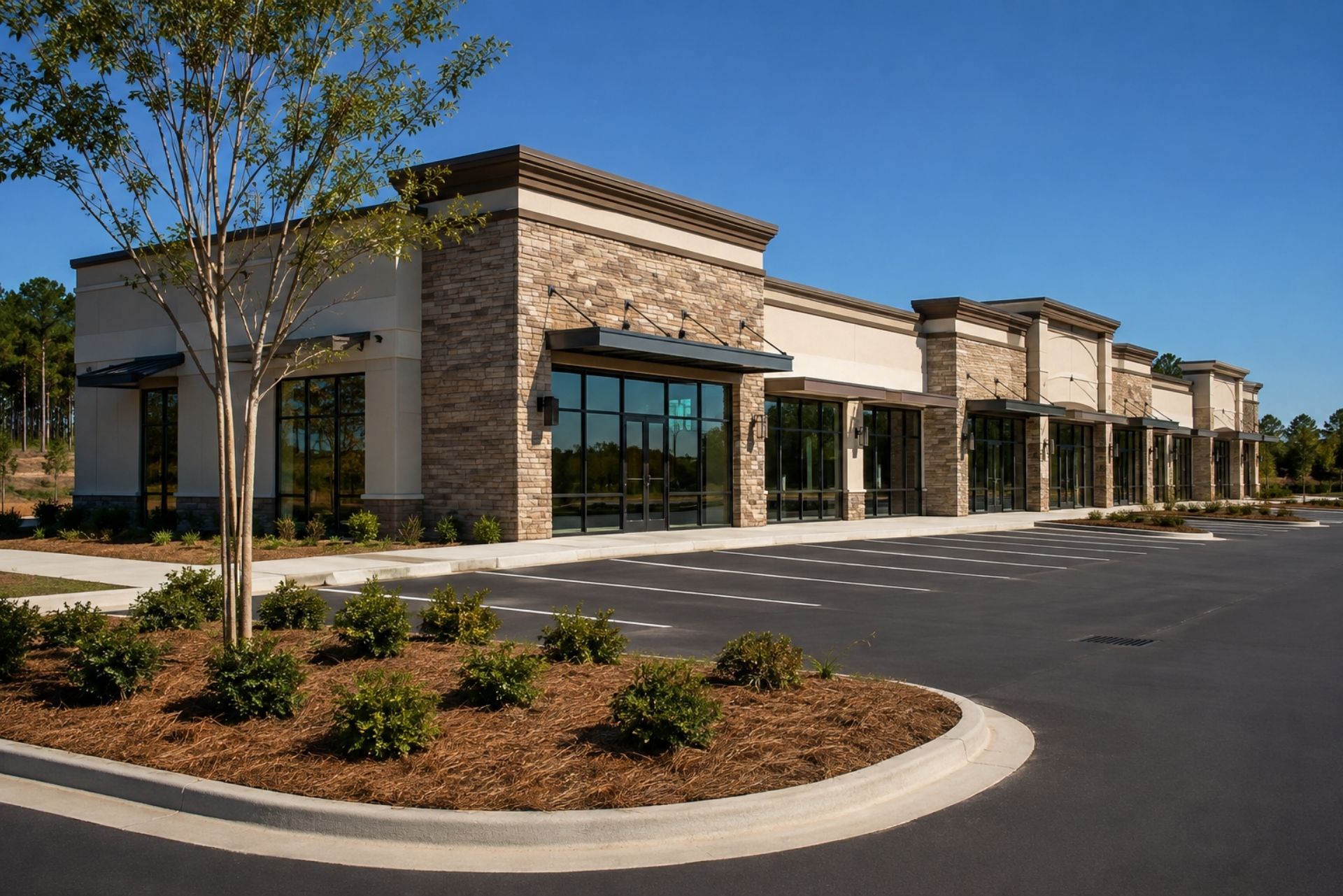
A standard commercial property policy typically covers the building itself (if you own it), business personal property like furniture, computers, and machinery, and inventory or stock. Most policies also include coverage for outdoor signs, fencing, and detached structures on the same premises.
Business income coverage, sometimes called business interruption insurance, is usually available as an add-on. This pays for lost revenue and ongoing expenses if a covered peril forces you to close temporarily. For a restaurant in Rock Hill that loses its kitchen to a fire, business income coverage can mean the difference between reopening and closing for good.
Why South Carolina Businesses Have Unique Risk Profiles
South Carolina sits squarely in the path of Atlantic hurricanes, and even inland cities like Columbia deal with severe thunderstorms, tornadoes, and flooding. The state also has older building stock in many commercial districts, which can increase vulnerability to wind and water damage.
Businesses along the coast from Myrtle Beach to Hilton Head face the highest wind and flood exposure, but properties across the state aren't immune. Hailstorms regularly cause significant damage to roofs and exteriors well inland. These factors mean South Carolina businesses often need more specialized coverage than a boilerplate policy provides.

Your CSP agent
Lawson Walker, CIC
Insurance Sales
On this page
CSP Insurance Services is a fully licensed independent insurance agency serving individuals, families, and businesses across South Carolina.
From our home in Florence, we proudly serve clients in Florence, Myrtle Beach, Rock Hill, Columbia, and communities throughout South Carolina. As an independent Trusted Choice agency, our team works with a wide range of top-rated carriers to provide personal and commercial coverage — home, auto, business, life, and more — tailored to the real needs of the people and businesses we protect.
Boat and Watercraft Coverage for Weekend Adventures
Your homeowners policy might cover a small kayak or canoe, but anything with a motor typically needs its own policy. Boat insurance covers physical damage to the vessel, liability for injuries or property damage you cause on the water, and sometimes towing and salvage costs.
Lake-specific risks differ from coastal ones. A boat kept at Myrtle Beach faces saltwater corrosion, hurricane exposure, and higher theft rates than one stored at a private dock on Lake Wateree. Your policy should reflect where you keep and operate the boat. An independent agency like CSP Insurance Services can compare quotes across multiple marine carriers to find coverage that actually matches your boating habits rather than forcing you into a one-size-fits-all plan.
| Feature | Admitted (Standard) Carriers | Non-Admitted (E&S) Carriers |
|---|---|---|
| State regulation | Fully regulated; rates filed with state | Exempt from rate filing; flexible pricing |
| Guaranty fund protection | Yes: state fund covers claims if carrier fails | No: no guaranty fund backstop |
| Policy forms | Standardized (ISO forms common) | Manuscript or custom forms |
| Risk appetite | Prefers low-to-moderate risk | Accepts high-risk and unusual exposures |
| Premium cost | Generally lower | Typically 20-75% higher |
| Surplus lines tax | Not applicable | Buyer pays state surplus lines tax (varies 2-5%) |
| Speed of placement | Standard timelines | Can be faster or slower depending on complexity |
| Feature | Basic Liability Only | Full Coverage |
|---|---|---|
| Bodily injury liability | State minimum (25/50) | Higher limits (100/300+) |
| Property damage liability | $25,000 | $100,000+ |
| Collision (your vehicle) | Not included | Included |
| Comprehensive (theft, weather) | Not included | Included |
| Uninsured motorist | Optional | Typically included |
| Rental car reimbursement | Not included | Often included |
| Typical annual cost (SC) | $600-$900 | $1,400-$2,200 |
The price difference is real, but so is the coverage gap. If you're financing or leasing a vehicle, your lender will require full coverage anyway.
| Feature | HMO | PPO | HDHP with HSA |
|---|---|---|---|
| Network Flexibility | Must use in-network providers; referrals needed | In-network and out-of-network options | Broad network; works like PPO |
| Monthly Premiums | Lowest | Highest | Moderate |
| Out-of-Pocket Costs | Low copays | Moderate copays/coinsurance | High deductible before coverage kicks in |
| Best For | Employees who want low costs and don't mind restrictions | Employees who want provider choice | Younger, healthier employees; tax-savvy savers |
| HSA Eligible | No | No | Yes |
South Carolina State Requirements and Regulations
South Carolina does not have a blanket state law requiring all businesses to carry commercial property insurance. That said, most commercial landlords require it as a condition of your lease, and any lender financing a commercial property will demand it as well. So while it may not be "required" by the state, you'll almost certainly need it in practice.
The Role of the South Carolina Department of Insurance
The South Carolina Department of Insurance (SCDOI) regulates all insurance products sold in the state, including commercial property policies. The department reviews rate filings, handles consumer complaints, and ensures carriers remain financially solvent. If you have a dispute with your insurer after a claim, the SCDOI is your first stop for filing a complaint.
One recent development worth noting: South Carolina has been proposing credit property insurance rate cuts for most coverages, which signals a slightly more favorable regulatory environment for property owners in 2026.
Mandatory vs. Recommended Coverages for Local Owners
While commercial property insurance itself isn't mandated by state law, South Carolina does require certain other business coverages. Workers' compensation is mandatory for businesses with four or more employees. The state also requires minimum auto liability limits of 25/50/25 for any business vehicles.
As for property coverage, the strong recommendation is to carry it regardless of legal requirements. Going without it is a gamble that most businesses can't afford to lose. An independent agency like CSP Insurance Services, which has been helping South Carolina businesses since 1939, can compare policies across multiple carriers to find coverage that fits your budget without leaving dangerous gaps.
| Feature | Basic Coverage | Extended Coverage |
|---|---|---|
| Liability | State minimums (25/50/25 in SC) | $500K-$1M+ limits |
| Collision | Often excluded or high deductible | Included with lower deductible |
| Comprehensive | May be excluded | Included (theft, weather, vandalism) |
| HNOA | Not included | Typically included |
| Uninsured Motorist | State minimum only | Higher limits available |
| Roadside/Towing | Not included | Available as add-on |
| Rental Reimbursement | Not included | Available as add-on |
For a restaurant owner in Florence with one delivery vehicle, basic coverage might seem sufficient. But if that driver causes a serious injury, the state minimum liability won't come close to covering the medical bills and legal costs. Extended coverage costs more upfront but prevents the kind of catastrophic out-of-pocket expense that closes businesses.
More hearing aid centers are offering in-home fitting and testing services, especially for elderly or mobility-limited patients. If any employee drives a company vehicle, or even their personal car, for business purposes, your personal auto policy won't cover accidents that happen during work-related trips.
A commercial auto policy covers liability, collision, and comprehensive damage for vehicles used in your business operations. South Carolina's minimum auto liability limits are 25/50/25 ($25,000 per person, $50,000 per accident for bodily injury, $25,000 for property damage), but most businesses should carry significantly higher limits. A serious accident during a house call could easily exceed those minimums.
Commercial Auto for Mobile Services
Coastal Risks: Wind, Hail, and Flood Considerations
If your business operates anywhere near the South Carolina coast, wind and flood exposure will dominate your insurance planning. Standard commercial property policies cover wind damage, but the deductible structure in coastal areas is very different from what you'd see in the Upstate.
Navigating Wind and Hail Deductibles
Most commercial property policies in coastal South Carolina include a separate wind and hail deductible, expressed as a percentage of the insured value rather than a flat dollar amount. A 2% wind/hail deductible on a building insured for $500,000 means you're responsible for the first $10,000 of wind or hail damage before the policy kicks in.
These percentage-based deductibles can catch business owners off guard. Many coverage gaps Carolina businesses often overlook involve misunderstanding how these deductibles apply during a named storm versus a regular thunderstorm. Named storm deductibles are sometimes even higher, ranging from 2% to 5% of the insured value. Know exactly which deductible applies to which type of event before storm season arrives.
The Difference Between Commercial Property and Flood Insurance
Here's a point that trips up a lot of business owners: standard commercial property insurance does not cover flooding. Flood damage requires a separate policy, typically through the National Flood Insurance Program (NFIP) or a private flood insurer. This applies whether your business is in a designated flood zone or not.
South Carolina's low-lying coastal geography makes flood insurance essential for businesses in Myrtle Beach, Charleston, and Beaufort. But even businesses in Columbia or Florence can face flash flooding. If you're in a FEMA-designated flood zone and have a federally backed mortgage or SBA loan, flood insurance is required. For everyone else, it's a smart investment given the state's rainfall patterns.
Boat and Watercraft Coverage for Weekend Adventures
Your homeowners policy might cover a small kayak or canoe, but anything with a motor typically needs its own policy. Boat insurance covers physical damage to the vessel, liability for injuries or property damage you cause on the water, and sometimes towing and salvage costs.
Lake-specific risks differ from coastal ones. A boat kept at Myrtle Beach faces saltwater corrosion, hurricane exposure, and higher theft rates than one stored at a private dock on Lake Wateree. Your policy should reflect where you keep and operate the boat. An independent agency like CSP Insurance Services can compare quotes across multiple marine carriers to find coverage that actually matches your boating habits rather than forcing you into a one-size-fits-all plan.
Boat and Watercraft Coverage for Weekend Adventures
Your homeowners policy might cover a small kayak or canoe, but anything with a motor typically needs its own policy. Boat insurance covers physical damage to the vessel, liability for injuries or property damage you cause on the water, and sometimes towing and salvage costs.
Lake-specific risks differ from coastal ones. A boat kept at Myrtle Beach faces saltwater corrosion, hurricane exposure, and higher theft rates than one stored at a private dock on Lake Wateree. Your policy should reflect where you keep and operate the boat. An independent agency like CSP Insurance Services can compare quotes across multiple marine carriers to find coverage that actually matches your boating habits rather than forcing you into a one-size-fits-all plan.
| Feature | Admitted (Standard) Carriers | Non-Admitted (E&S) Carriers |
|---|---|---|
| State regulation | Fully regulated; rates filed with state | Exempt from rate filing; flexible pricing |
| Guaranty fund protection | Yes: state fund covers claims if carrier fails | No: no guaranty fund backstop |
| Policy forms | Standardized (ISO forms common) | Manuscript or custom forms |
| Risk appetite | Prefers low-to-moderate risk | Accepts high-risk and unusual exposures |
| Premium cost | Generally lower | Typically 20-75% higher |
| Surplus lines tax | Not applicable | Buyer pays state surplus lines tax (varies 2-5%) |
| Speed of placement | Standard timelines | Can be faster or slower depending on complexity |
Comparison: Basic vs. Special Form Coverage
The type of policy form you choose determines how broadly your property is protected. The two main options are Basic Form (named perils) and Special Form (open perils), and the difference is significant.
Table: Named Perils vs. Open Perils Comparison
| Feature | Basic Form (Named Perils) | Special Form (Open Perils) |
|---|---|---|
| What's covered | Only perils specifically listed in the policy | All perils except those specifically excluded |
| Common covered perils | Fire, lightning, explosion, windstorm, hail, smoke, vandalism | Everything not excluded (e.g., accidental water damage, falling objects, weight of ice/snow) |
| Burden of proof | You must prove the damage was caused by a named peril | Insurer must prove an exclusion applies |
| Typical cost | Lower premium | Higher premium (10-15% more on average) |
| Best for | Budget-conscious businesses with lower risk | Businesses wanting the broadest protection |
| Common exclusions in both | Flood, earthquake, wear and tear, intentional damage | Flood, earthquake, wear and tear, intentional damage |
For most South Carolina businesses, the Special Form is worth the extra cost. The burden-of-proof advantage alone makes claims significantly easier to settle. When a pipe bursts inside your wall on a January night and you discover the damage three days later, you don't want to be arguing over whether the specific cause is listed in your policy.
Specialty Lines: Flood, Earthquake, and Valuable Items
Flood insurance is a separate policy, typically written through FEMA's National Flood Insurance Program or a private carrier. If your home sits in a designated flood zone anywhere along the SC coast or near inland rivers, your mortgage lender will require it. But even homes outside mapped flood zones can flood: roughly 25% of flood claims come from properties in low-to-moderate risk areas.
Earthquake coverage is less common in South Carolina, but the state sits near the Charleston fault zone, which produced a magnitude 7.3 quake in 1886. A rider or standalone earthquake policy is worth considering if you're in the Lowcountry.
Scheduled personal property endorsements cover high-value items like jewelry, art, firearms, or musical instruments that exceed standard policy sub-limits. Most homeowners policies cap jewelry coverage at $1,500-$2,500 per item. If your engagement ring is worth $8,000, you need a scheduled endorsement or inland marine floater to cover the difference.
ERISA Requirements for Life Insurance Plans
If you offer employer-paid group life insurance, your plan almost certainly falls under the Employee Retirement Income Security Act. ERISA requires you to provide employees with a Summary Plan Description that explains benefits, eligibility, and claims procedures in plain language. You also need to file Form 5500 annually with the Department of Labor if your plan covers 100 or more participants. The ERISA compliance checklist for employers includes maintaining a written plan document, designating a plan fiduciary, and following proper claims and appeals procedures. Skipping any of these steps creates real liability.
South Carolina doesn't have its own mini-ERISA statute, so federal rules govern most employer-sponsored plans. But the SC Department of Insurance does regulate the carriers themselves, so make sure your insurer is licensed to operate in the state. Employers who fail to meet ERISA's fiduciary standards can face personal liability, not just corporate penalties.
Determining Your Policy Limits and Valuation
Getting your policy limits right is just as important as choosing the right coverage type. Underinsuring your property is one of the most common and costly mistakes business owners make.
Replacement Cost vs. Actual Cash Value
Your policy will value your property using one of two methods. Replacement cost pays to repair or replace damaged property with materials of similar kind and quality, without deducting for depreciation. Actual cash value (ACV) pays replacement cost minus depreciation, which means you'll get less money for older buildings and equipment.
The difference can be enormous. A 15-year-old commercial HVAC system might cost $25,000 to replace but have an ACV of only $8,000. If your policy uses ACV, you're covering that $17,000 gap out of pocket. Replacement cost policies carry slightly higher premiums, but they protect you from absorbing depreciation losses after a claim.
How Coinsurance Clauses Affect Your Payout
Most commercial property policies include a coinsurance clause, typically set at 80%. This means you must insure your property for at least 80% of its total replacement value. If you don't, the insurer will penalize you at claim time by reducing your payout proportionally.
Here's a quick example: your building has a replacement value of $1,000,000, and your policy has an 80% coinsurance clause. You need at least $800,000 in coverage. If you only carry $600,000 and suffer a $200,000 loss, the insurer calculates your payout as ($600,000 / $800,000) x $200,000 = $150,000. You'd be $50,000 short. This is a painful lesson many business owners learn only after filing a claim.
The good news for South Carolina property owners in 2026 is that well-maintained, non-catastrophe properties are seeing rate changes ranging from flat to -5%, making it more affordable to carry adequate limits.
Boat and Watercraft Coverage for Weekend Adventures
Your homeowners policy might cover a small kayak or canoe, but anything with a motor typically needs its own policy. Boat insurance covers physical damage to the vessel, liability for injuries or property damage you cause on the water, and sometimes towing and salvage costs.
Lake-specific risks differ from coastal ones. A boat kept at Myrtle Beach faces saltwater corrosion, hurricane exposure, and higher theft rates than one stored at a private dock on Lake Wateree. Your policy should reflect where you keep and operate the boat. An independent agency like CSP Insurance Services can compare quotes across multiple marine carriers to find coverage that actually matches your boating habits rather than forcing you into a one-size-fits-all plan.
Boat and Watercraft Coverage for Weekend Adventures
Your homeowners policy might cover a small kayak or canoe, but anything with a motor typically needs its own policy. Boat insurance covers physical damage to the vessel, liability for injuries or property damage you cause on the water, and sometimes towing and salvage costs.
Lake-specific risks differ from coastal ones. A boat kept at Myrtle Beach faces saltwater corrosion, hurricane exposure, and higher theft rates than one stored at a private dock on Lake Wateree. Your policy should reflect where you keep and operate the boat. An independent agency like CSP Insurance Services can compare quotes across multiple marine carriers to find coverage that actually matches your boating habits rather than forcing you into a one-size-fits-all plan.
| Feature | Admitted (Standard) Carriers | Non-Admitted (E&S) Carriers |
|---|---|---|
| State regulation | Fully regulated; rates filed with state | Exempt from rate filing; flexible pricing |
| Guaranty fund protection | Yes: state fund covers claims if carrier fails | No: no guaranty fund backstop |
| Policy forms | Standardized (ISO forms common) | Manuscript or custom forms |
| Risk appetite | Prefers low-to-moderate risk | Accepts high-risk and unusual exposures |
| Premium cost | Generally lower | Typically 20-75% higher |
| Surplus lines tax | Not applicable | Buyer pays state surplus lines tax (varies 2-5%) |
| Speed of placement | Standard timelines | Can be faster or slower depending on complexity |
Does this cover me if a hacker steals my data?
Not exactly. Crime insurance covers financial theft, like funds transferred fraudulently. Data breaches and the costs associated with them (notification, credit monitoring, regulatory fines) fall under cyber liability insurance. Some overlap exists with computer fraud coverage, but a standalone cyber policy is the right tool for data-related incidents. The FBI found that 85% of cybercrime losses in 2025 traced back to human error, which underscores why both crime and cyber policies matter.
Common Questions About South Carolina Business Insurance
FAQ: Cost Factors, Hurricane Coverage, and Claims
How much does commercial property insurance cost in South Carolina? Premiums vary widely based on location, building age, construction type, and claims history. A small retail space in Columbia might pay $1,200-$2,500 annually, while a coastal restaurant could pay $5,000 or more. Getting quotes from multiple carriers through an independent agency is the fastest way to find competitive rates.
Does my policy cover hurricane damage? Wind damage from hurricanes is typically covered under your commercial property policy, but with a separate named-storm or wind/hail deductible. Flooding from storm surge or rain is not covered and requires a separate flood policy.
How long does it take to settle a commercial property claim? Simple claims (broken window, minor theft) can settle in a few weeks. Complex claims involving major storm damage or disputes over valuation can take several months. Document everything with photos and receipts from day one.
Do I need business interruption coverage? If your business would lose revenue during a shutdown, yes. Business interruption coverage is especially valuable for South Carolina businesses with high fixed costs like rent, payroll, and loan payments.
Can I bundle commercial property with other business insurance? Yes. A Business Owners Policy (BOP) bundles commercial property and general liability coverage at a discount. It's a popular option for small to mid-sized businesses.
What's the difference between an independent agent and a captive agent? A captive agent represents one insurance company. An independent agent, like the team at CSP Insurance Services, works with multiple carriers and can compare options to find the best fit for your specific situation.
Specialty Lines: Flood, Earthquake, and Valuable Items
Flood insurance is a separate policy, typically written through FEMA's National Flood Insurance Program or a private carrier. If your home sits in a designated flood zone anywhere along the SC coast or near inland rivers, your mortgage lender will require it. But even homes outside mapped flood zones can flood: roughly 25% of flood claims come from properties in low-to-moderate risk areas.
Earthquake coverage is less common in South Carolina, but the state sits near the Charleston fault zone, which produced a magnitude 7.3 quake in 1886. A rider or standalone earthquake policy is worth considering if you're in the Lowcountry.
Scheduled personal property endorsements cover high-value items like jewelry, art, firearms, or musical instruments that exceed standard policy sub-limits. Most homeowners policies cap jewelry coverage at $1,500-$2,500 per item. If your engagement ring is worth $8,000, you need a scheduled endorsement or inland marine floater to cover the difference.
ERISA Requirements for Life Insurance Plans
If you offer employer-paid group life insurance, your plan almost certainly falls under the Employee Retirement Income Security Act. ERISA requires you to provide employees with a Summary Plan Description that explains benefits, eligibility, and claims procedures in plain language. You also need to file Form 5500 annually with the Department of Labor if your plan covers 100 or more participants. The ERISA compliance checklist for employers includes maintaining a written plan document, designating a plan fiduciary, and following proper claims and appeals procedures. Skipping any of these steps creates real liability.
South Carolina doesn't have its own mini-ERISA statute, so federal rules govern most employer-sponsored plans. But the SC Department of Insurance does regulate the carriers themselves, so make sure your insurer is licensed to operate in the state. Employers who fail to meet ERISA's fiduciary standards can face personal liability, not just corporate penalties.
Making the Right Choice for Your Business
Choosing the right commercial property coverage in South Carolina comes down to understanding your specific risks, carrying adequate limits, and not assuming a standard policy covers everything. Coastal businesses need to pay close attention to wind/hail deductibles and flood exclusions. Inland businesses shouldn't ignore flood risk either. And every business owner should understand how coinsurance works before they're forced to learn the hard way during a claim.
The 2026 insurance market is offering some of the most favorable commercial property rates in recent years, especially for well-maintained properties with clean loss histories. That makes this a good time to review your current coverage and make sure your limits reflect today's replacement costs, not what you paid five years ago.
If you're unsure whether your current policy has gaps or you're shopping for coverage for the first time, working with an independent agency that knows South Carolina's market makes a real difference. CSP Insurance Services can walk you through your options across multiple carriers and build a policy that actually matches your risk profile. Request a quote to start a conversation with their team and get the clarity you need before the next storm season.
About the author
Lawson Walker, CIC
I'm proud to be part of an agency that's served Florence since 1939. CSP Insurance Services started as Cormell-Streett & Patterson, built by people who believed insurance should be personal — and more than eight decades later, that conviction still drives everything we do. Commitment, Service, Protection isn't just what CSP stands for; it's how I approach every client relationship.
As an independent, Trusted Choice agency, we aren't tied to any single carrier. That means I work for you — shopping multiple companies to match you with coverage that actually fits your family, your business, and your budget. No call centers, no chatbots. Just a local expert who takes the time to understand what matters to you and stands by you when it counts.
Whether you're protecting your home, your car, or a business you've spent years building, I'd be glad to help you find the right coverage.
We compare several carriers to find a policy that fits you, not one company's products.
◆
80+ years local experience
1939
Serving SC
Most Requested
Core business coverage.
The policies most South Carolina businesses start with.

Commercial Property
Protect the building, equipment, and inventory your business runs on, so a covered fire, theft, or storm doesn’t become a closed door.

Workers Compensation
Required for most South Carolina employers with staff. It covers medical bills and lost wages when an employee is hurt on the job.

Commercial Auto
Cars, trucks, and fleets used for work need more than a personal policy. This handles liability, damage, and your drivers.

General Liability
Accidents happen on the job and on your property. General liability covers third-party injury and property damage claims against your business.

Inland Marine
Tools, equipment, and goods on the move aren’t covered by standard property policies. Inland marine protects them wherever they travel.

Business Owners (BOP)
A business owners policy bundles property and liability coverage into one package, often at a better price for small businesses.
We compare several carriers to find a policy that fits you, not one company's products.
◆
80+ years local experience
1939
Serving SC

Insurance Sales
J. Roger Jordan, CIC
[CONFIRM bio]
Personal Insurance
Coverage for your home, vehicles, and family.
Protect what matters most with personal policies shopped across our carriers.
Home
Your house is likely your largest investment. Home insurance helps rebuild after covered damage and protects you from liability.
Auto
South Carolina drivers need real protection. Auto coverage handles liability, collision, medical costs, and uninsured drivers.
Umbrella
When a serious claim climbs past your home or auto limits, umbrella coverage adds an extra layer of liability protection.
Boat
Time on the water should be worry-free. Boat coverage protects your vessel, your passengers, and your liability on the lake or coast.
Motorcycle
Riders need coverage built for the road. Motorcycle insurance protects your bike, your gear, and you after an accident.
Condo
Your association covers the building, but not what’s inside. Condo insurance protects your belongings, improvements, and liability.
We compare several carriers to find a policy that fits you, not one company's products.
◆
80+ years local experience
1939
Serving SC
Insurance Sales
J. Roger Jordan, CIC
[CONFIRM bio]
Boat
Your association covers the building, but not what’s inside. Condo insurance protects your belongings, improvements, and liability.
Time on the water should be worry-free. Boat coverage protects your vessel, your passengers, and your liability on the lake or coast.
Condo
Motorcycle
Riders need coverage built for the road. Motorcycle insurance protects your bike, your gear, and you after an accident.
Industries We Serve
Specialized coverage for your industry.
Every industry carries its own risk. We help South Carolina businesses protect what they've built.

Restaurants
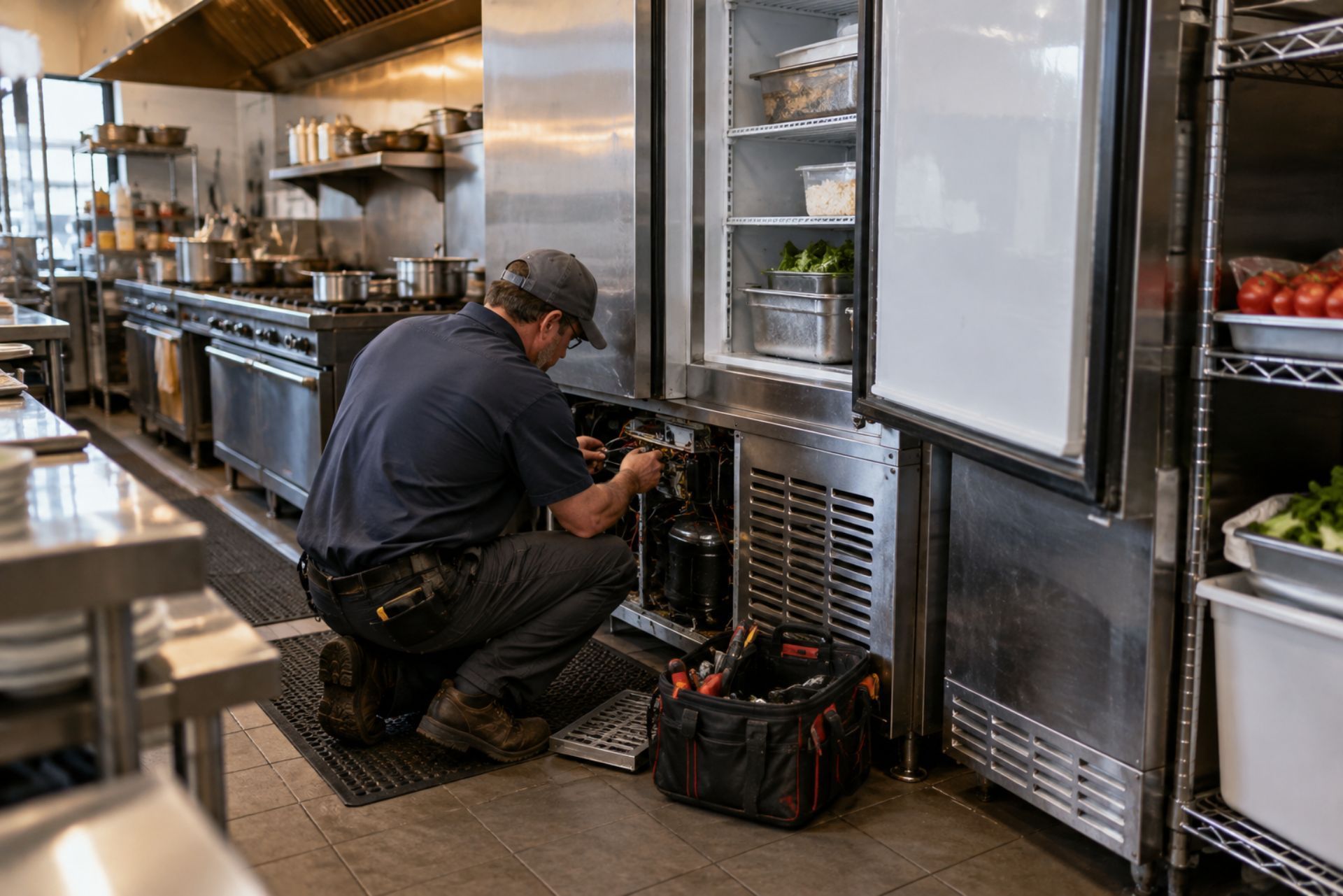
Kitchens, customers, and staff create daily exposure. We protect your property, equipment, liquor liability, and employees.

Manufacturers
From equipment breakdown to product liability, manufacturers face risk on the floor and beyond. We help cover property, machinery, and goods.

Healthcare Providers
Practices and clinics carry patient, property, and professional risk. We help cover liability, equipment, and the people who run your practice.
We compare several carriers to find a policy that fits you, not one company's products.
◆
80+ years local experience
1939
Serving SC
Commercial Property
Protect the building, equipment, and inventory your business runs on, so a covered fire, theft, or storm doesn’t become a closed door.
Commercial Auto
Cars, trucks, and fleets used for work need more than a personal policy. This handles liability, damage, and your drivers.
How It Works
Getting covered is simple.
Four steps, one real person from start to finish.
We compare carriers
We shop options across our carriers to find strong protection at a fair price.
We compare several carriers to find a policy that fits you, not one company's products.
Multi-carrier choice
Claims advocacy
When a claim happens, we stand in your corner and help move it forward with your carrier.
Local SC roots
We live and work in Florence and understand the risks your community faces because we face them too.
Client Reviews
Why clients choose CSP.
Independent advice, real people, and decades of local roots.
We compare several carriers to find a policy that fits you, not one company's products.
◆
80+ years local experience
1939
Serving SC
Insurance Sales
J. Roger Jordan, CIC
[CONFIRM bio]
Boat
Your association covers the building, but not what’s inside. Condo insurance protects your belongings, improvements, and liability.
Time on the water should be worry-free. Boat coverage protects your vessel, your passengers, and your liability on the lake or coast.
Condo
Motorcycle
Riders need coverage built for the road. Motorcycle insurance protects your bike, your gear, and you after an accident.
FAQs
Questions, answered.
Straight answers about working with an independent agency.

What does an independent insurance agency do?
An independent agency represents several carriers instead of one. We compare coverage and pricing across companies, then recommend the policy that fits you best.
Do you cover both personal and business insurance?
Yes. CSP writes personal lines like home and auto, and commercial lines for businesses across South Carolina.
How long has CSP been in business?
CSP traces its roots to 1939, with more than 80 years serving South Carolina families and businesses.
Will I work with a real person?
Always. No call centers and no chatbots — you work with a local team member who knows your account.
Which areas do you serve?
We’re based in Florence and serve clients statewide, including Myrtle Beach, Rock Hill, and Columbia.
How do I get a quote?
Request a quote online, call us, or stop by the office. A real person will review your needs and follow up.
How It Works
Insurance tips & updates.
Plain-language guidance to help you make confident decisions.
We compare several carriers to find a policy that fits you, not one company's products.
◆
80+ years local experience
1939
Serving SC
Insurance Sales
J. Roger Jordan, CIC
[CONFIRM bio]
Boat
Your association covers the building, but not what’s inside. Condo insurance protects your belongings, improvements, and liability.
Time on the water should be worry-free. Boat coverage protects your vessel, your passengers, and your liability on the lake or coast.
Condo
Motorcycle
Riders need coverage built for the road. Motorcycle insurance protects your bike, your gear, and you after an accident.
Get a Quote
Let's find your coverage.
Tell us a little about what you need to protect. A real person from our Florence team will review it and follow up.
2420 Hoffmeyer Road, Suite D
Florence, SC 29501
Mon–Fri 8:30am – 5:00pm