
CKnowing what your policy excludes is just as critical as knowing what it covers. Standard HO-3 policies are broad, but they have clear boundaries, and those boundaries tend to show up at the worst possible times.
Natural Disasters: Why Flood and Earthquake Coverage Are Separate
Standard homeowners policies do not cover flood damage or earthquake damage. Period. This is non-negotiable across virtually every carrier in the market.
For South Carolina homeowners, especially those along the coast from Myrtle Beach to Charleston, flood insurance isn't optional: it's essential. Even homes outside FEMA-designated flood zones can flood. About 25% of flood claims come from properties in low-to-moderate risk areas. You can purchase flood coverage through the National Flood Insurance Program (NFIP) or through private carriers, and an independent agency can compare both options to find the best fit for your risk profile and budget.
Earthquake coverage matters more than most South Carolinians realize, too. The Charleston area sits near a historically active seismic zone, and earthquake endorsements are relatively affordable compared to the potential loss.
Maintenance Issues vs. Sudden and Accidental Damage
Your policy draws a hard line between sudden, accidental damage and gradual deterioration. A pipe that bursts unexpectedly and floods your bathroom? Covered. A pipe that's been slowly leaking for months, rotting your subfloor? That's a maintenance issue, and your insurer will deny the claim.
This distinction trips up homeowners constantly. Mold that develops from a long-ignored leak, termite damage, foundation settling, and roof wear from age are all considered maintenance responsibilities. The logic is straightforward: insurance is designed for unexpected events, not predictable upkeep. Service line coverage is one endorsement worth considering, as it protects underground utility lines running to your home that standard policies typically exclude.
A small restaurant owner in Florence gets sued after a customer slips on a wet floor. A retail shop in Myrtle Beach loses its entire inventory to a burst pipe over a holiday weekend. Both of these business owners need insurance, but they don't need the same type of coverage. The question of whether to buy a standalone general liability policy or bundle it into a business owners policy is one that South Carolina entrepreneurs face constantly, and the wrong choice can leave serious gaps in protection.
The answer depends on what you own, where you operate, and what risks keep you up at night. A general liability policy handles one specific category of risk. A BOP wraps that same liability coverage together with property and business interruption protection into a single package. For SC business owners trying to figure out which one to buy, the decision isn't just about price: it's about what you'd actually need if something went wrong tomorrow.
Here's what you should know before you sign anything.
The Core Differences Between General Liability and a BOP
At their core, these two products serve different purposes. One is a single line of coverage. The other is a bundle. Understanding what each one does, and what it leaves out, is the first step toward making a smart choice.
General Liability: Protecting Against Third-Party Claims
General liability insurance covers claims made by people outside your business: customers, vendors, visitors, or anyone who interacts with your company. If someone gets injured on your premises, if your product causes harm, or if your advertising damages another business's reputation, GL is the policy that responds.
A standard GL policy in South Carolina typically covers bodily injury, property damage to others, personal and advertising injury, and medical payments for minor injuries on your premises. Most policies carry limits of $1 million per occurrence and $2 million aggregate, though you can adjust those numbers.
What GL doesn't cover is equally important. It won't pay to repair your own building, replace your own equipment, or cover lost income if you have to shut down temporarily. It also won't cover employee injuries (that's workers' comp) or professional mistakes (that requires professional liability). Think of GL as your defense against the outside world, not protection for what's inside your four walls.
BOP: Combining Liability with Property Protection
A business owners policy takes that same general liability coverage and packages it with commercial property insurance and business interruption coverage. You get protection against third-party claims plus coverage for your building, equipment, inventory, furniture, and lost revenue if a covered event forces you to close.
The business interruption piece is often the most undervalued part of a BOP. If a fire damages your Columbia storefront and you can't operate for three months, business interruption coverage pays for ongoing expenses like rent, payroll, and loan payments while you rebuild. Without it, many small businesses simply can't survive an extended closure.
BOPs are designed for small to mid-sized businesses and are typically priced lower than buying each coverage separately. Insurers can offer this discount because they're bundling standardized coverages for lower-risk businesses. That said, BOPs do have eligibility requirements: your business generally needs to fall below certain revenue and square footage thresholds.
Comparison Table: Features and Coverage Limits
| Feature | General Liability Only | Business Owners Policy (BOP) |
|---|---|---|
| Bodily injury to others | Yes | Yes |
| Property damage to others | Yes | Yes |
| Personal/advertising injury | Yes | Yes |
| Your building coverage | No | Yes |
| Your equipment/inventory | No | Yes |
| Business interruption | No | Yes |
| Typical annual cost (SC) | $400 - $1,500 | $750 - $3,500 |
| Best for | Service-only, no physical assets | Businesses with property or inventory |
| Customizable with endorsements | Limited | Yes, highly flexible |
| Customizable with endorsements | Limited | Yes, highly flexible |
| Professional liability included | No | No (but can be added) |
The cost difference between a standalone GL policy and a BOP is often smaller than people expect. For a business that owns or leases space, the BOP frequently offers better value per dollar of coverage.
South Carolina Business Risks and Requirements
South Carolina's geography, weather patterns, and regulatory environment create a unique risk profile that directly affects which policy makes sense for your business.
Common Risks for SC Coastal and Inland Businesses
Coastal businesses in Myrtle Beach, Charleston, and Hilton Head face hurricane and tropical storm exposure every year from June through November. Wind and hail damage can devastate a commercial property in hours, and flood zones along the coast add another layer of risk that standard policies don't automatically cover.
Inland businesses in Florence, Columbia, and Rock Hill deal with different but real threats: severe thunderstorms, tornadoes, and the occasional ice storm that can knock out power for days. A restaurant in Rock Hill that loses power for 48 hours is looking at thousands of dollars in spoiled food, and that's before counting the revenue lost from being closed.
Slip-and-fall claims are consistently among the most common GL claims filed in South Carolina, particularly for retail stores, restaurants, and any business with public foot traffic. These claims average between $20,000 and $50,000 in settlements, and they can climb much higher if surgery is involved.
State-Specific Factors Impacting Your Choice
South Carolina doesn't mandate general liability insurance by state law, but that doesn't mean you can skip it. Many commercial landlords require proof of GL coverage before signing a lease. Government contracts almost always require it. And if you operate without liability coverage and get sued, you're personally on the hook for every dollar of a judgment.
The SC Department of Insurance regulates policy forms and rates, and the state's wind and hail pool (the SC Wind and Hail Underwriting Association) provides coverage in coastal areas where private insurers won't write policies. If your business is in a coastal county, you may need a separate wind and hail policy on top of your BOP, since many BOPs exclude wind damage in those zones.
Flood insurance is another critical consideration. Standard BOPs and GL policies never cover flood damage. If your business sits in a FEMA-designated flood zone, you'll need a separate National Flood Insurance Program (NFIP) policy or a private flood policy regardless of which base coverage you choose.
Choosing the Right Policy for Your Industry
Your industry and business model should drive this decision more than anything else. A freelance graphic designer and a restaurant owner have fundamentally different risk profiles.
When General Liability is Sufficient
Standalone GL coverage makes sense for businesses that don't own significant physical assets and don't operate from a dedicated commercial space. This includes home-based consultants, freelancers, mobile service providers, and sole proprietors who work primarily at client locations.
A landscaping crew in Columbia that operates out of a truck and stores equipment in a personal garage probably doesn't need commercial property coverage. Their biggest exposure is someone tripping over a rake at a job site or a mower throwing a rock through a window: both covered by GL.
Similarly, an IT consultant working from a home office in Florence might only need GL to satisfy client contract requirements. Their laptop and home office furniture are likely covered under their homeowners policy, making a full BOP unnecessary.
When a Business Owners Policy is Essential
If you lease or own commercial space, carry inventory, or depend on expensive equipment, a BOP is almost always the smarter buy. Restaurants, retail shops, medical offices, salons, and small manufacturers all fall into this category.
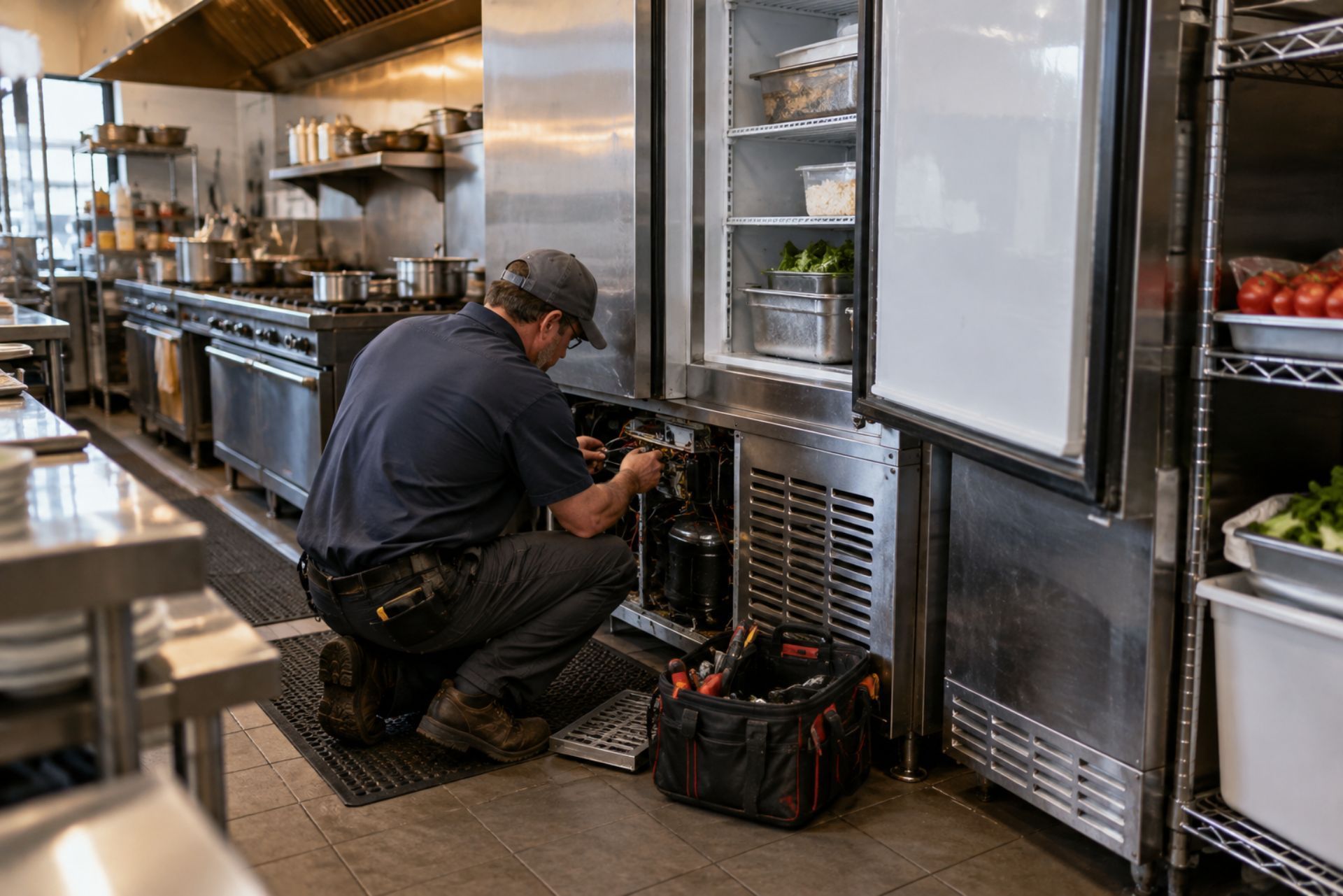
Consider a boutique clothing store on King Street or a seafood restaurant near Myrtle Beach. These businesses have tens of thousands of dollars in inventory and equipment that a GL policy won't touch. If a kitchen fire destroys a restaurant's commercial ovens and forces a two-month closure, the owner needs property coverage and business interruption protection to survive, not just liability coverage.
An independent agency like CSP Insurance Services can compare BOP options across multiple carriers to find the right combination of coverage and price. Because they're not locked into a single insurer's product, they can match the policy structure to your specific situation, whether you're running a nonprofit in Rock Hill or a healthcare practice in Columbia.
Common Questions About SC Business Insurance
FAQ: Do I need a BOP if I work from home in SC?
Probably not. Most home-based businesses can get by with a general liability policy and a home business endorsement on their homeowners insurance. But if you store significant inventory or expensive equipment at home, a BOP or an in-home business policy might be worth exploring.
FAQ: Can I add professional liability to a BOP?
Yes. Most insurers offer professional liability (also called errors and omissions) as an endorsement to a BOP. This is common for accountants, consultants, real estate agents, and other service professionals who could face claims of negligence or mistakes.
FAQ: Is a BOP more expensive than a standalone GL policy?
A BOP costs more than GL alone because it includes more coverage. But it's almost always cheaper than buying general liability, commercial property, and business interruption as three separate policies. For most small SC businesses, the price difference between GL-only and a BOP runs $300 to $2,000 per year depending on your industry and location.
FAQ: Does a BOP cover hurricane damage in South Carolina?
Partially. A BOP typically covers wind damage in inland areas, but many carriers exclude wind and hail in coastal counties. You may need a separate wind policy through the SC Wind and Hail Underwriting Association. Flood damage is never covered by a BOP and requires a separate flood policy.
FAQ: What happens if I don't have liability insurance?
You're personally responsible for any judgments, legal fees, and settlements. A single slip-and-fall lawsuit can easily reach $50,000 or more. Without insurance, that money comes directly from your business accounts or personal assets. Many small businesses that face an uninsured lawsuit don't recover.
Making the Right Choice for Your Future
The decision between general liability and a business owners policy comes down to one honest question: what do you stand to lose? If your business is mostly you, your skills, and a laptop, GL coverage handles your primary exposure. If you've invested in a physical location, equipment, or inventory, a BOP protects those assets while still covering liability claims.
South Carolina's mix of coastal weather risks, active tourism economies, and growing inland business corridors means there's no one-size-fits-all answer. A Myrtle Beach surf shop and a Columbia accounting firm need very different coverage structures, even if they're roughly the same size.
The smartest move is to talk with an independent agent who can lay out your options side by side. CSP Insurance Services has been helping SC business owners find the right fit since 1939, working with multiple carriers to build coverage around your actual risks rather than pushing a single company's product. Whether you need a straightforward GL policy or a customized BOP with endorsements for your specific industry, getting personalized guidance beats guessing every time.
Don't wait for a claim to find out what your policy doesn't cover. Reach out to CSP Insurance Services today for a no-obligation review of your business insurance needs.
About the author
Lawson Walker, CIC
I'm proud to be part of an agency that's served Florence since 1939. CSP Insurance Services started as Cormell-Streett & Patterson, built by people who believed insurance should be personal — and more than eight decades later, that conviction still drives everything we do. Commitment, Service, Protection isn't just what CSP stands for; it's how I approach every client relationship.
As an independent, Trusted Choice agency, we aren't tied to any single carrier. That means I work for you — shopping multiple companies to match you with coverage that actually fits your family, your business, and your budget. No call centers, no chatbots. Just a local expert who takes the time to understand what matters to you and stands by you when it counts.
Whether you're protecting your home, your car, or a business you've spent years building, I'd be glad to help you find the right coverage.
Recent Posts