
CKnowing what your policy excludes is just as critical as knowing what it covers. Standard HO-3 policies are broad, but they have clear boundaries, and those boundaries tend to show up at the worst possible times.
Natural Disasters: Why Flood and Earthquake Coverage Are Separate
Standard homeowners policies do not cover flood damage or earthquake damage. Period. This is non-negotiable across virtually every carrier in the market.
For South Carolina homeowners, especially those along the coast from Myrtle Beach to Charleston, flood insurance isn't optional: it's essential. Even homes outside FEMA-designated flood zones can flood. About 25% of flood claims come from properties in low-to-moderate risk areas. You can purchase flood coverage through the National Flood Insurance Program (NFIP) or through private carriers, and an independent agency can compare both options to find the best fit for your risk profile and budget.
Earthquake coverage matters more than most South Carolinians realize, too. The Charleston area sits near a historically active seismic zone, and earthquake endorsements are relatively affordable compared to the potential loss.
Maintenance Issues vs. Sudden and Accidental Damage
Your policy draws a hard line between sudden, accidental damage and gradual deterioration. A pipe that bursts unexpectedly and floods your bathroom? Covered. A pipe that's been slowly leaking for months, rotting your subfloor? That's a maintenance issue, and your insurer will deny the claim.
This distinction trips up homeowners constantly. Mold that develops from a long-ignored leak, termite damage, foundation settling, and roof wear from age are all considered maintenance responsibilities. The logic is straightforward: insurance is designed for unexpected events, not predictable upkeep. Service line coverage is one endorsement worth considering, as it protects underground utility lines running to your home that standard policies typically exclude.
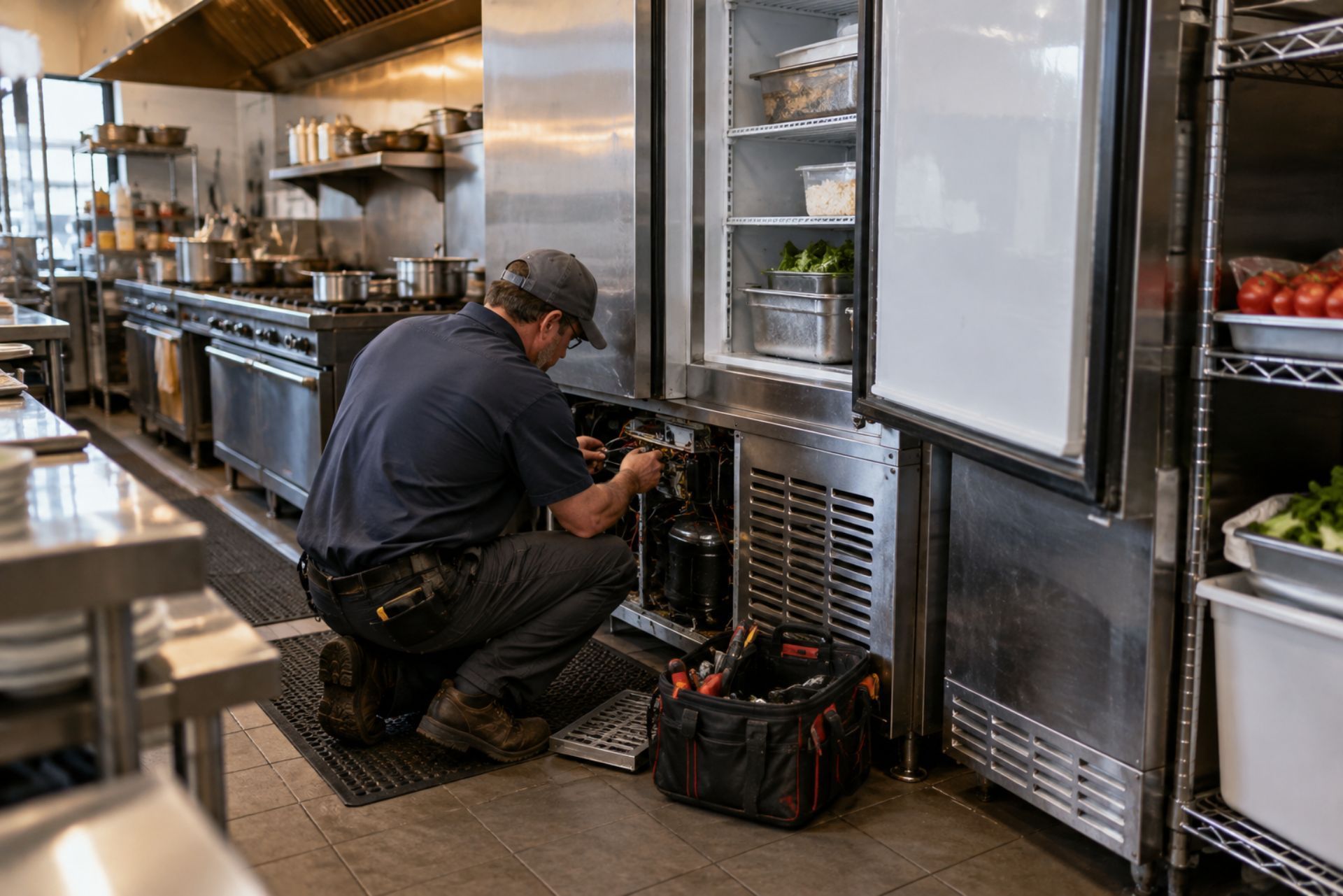
A fire tears through a restaurant kitchen in Florence, South Carolina on a Friday night. The building is insured, so the property damage claim goes smoothly enough. But what about the three months of lost revenue while the kitchen gets rebuilt? The staff that still needs paychecks? The temporary food truck the owner rents to keep regulars from drifting to competitors? That's where business income coverage steps in, and it's the part of a commercial policy that most business owners understand the least.
Business income insurance covers lost profits and continuing expenses when a covered event forces your operations to slow down or shut entirely. It sounds straightforward, but the mechanics of how lost income gets measured, how waiting periods and restoration timelines work, and why so many businesses carry the wrong limits make this one of the trickiest coverages to get right. The business interruption insurance market continues to grow precisely because more owners are realizing how exposed they are. If you own or operate a business anywhere in South Carolina, from a Myrtle Beach hotel to a Columbia medical practice, understanding these details could be the difference between recovering from a disaster and closing for good.
Understanding Business Income Coverage Basics
Business income coverage is a component of most commercial property policies, and it exists to replace income you would have earned if a covered loss hadn't happened. Think of it as a financial bridge: it keeps your business financially whole during the gap between a disaster and full recovery. The policy pays what you would have netted during that downtime, minus expenses that stop when operations stop.
This isn't the same as property insurance. Property coverage fixes or replaces damaged buildings and equipment. Business income coverage addresses the revenue stream that dries up while those repairs are underway. Most standard commercial policies include some form of this protection, though the
National Association of Insurance Commissioners notes that coverage terms vary significantly between policy forms and carriers.
Defining Business Interruption and Lost Net Income
Lost net income means the profit your business would have generated during the period it was shut down or operating at reduced capacity. Insurers calculate this by looking at your historical financial records, typically your pre-loss income statements, and projecting forward. If your restaurant averaged $80,000 in monthly net income before a fire, that's the baseline the adjuster uses.
Seasonal fluctuations matter here. A Myrtle Beach surf shop that gets hit by a hurricane in June faces a very different income loss than one damaged in January. Insurers are supposed to account for these patterns, but disputes over projected income are among the most common reasons business income claims get contentious.
Continuing Normal Operating Expenses
Your business doesn't stop costing money just because it stops making money. Loan payments, lease obligations, utility minimums, insurance premiums, and employee salaries for key staff all keep coming due. Business income coverage picks up these continuing expenses so you don't burn through reserves or take on debt while waiting to reopen.
The key word is "continuing." If you lay off hourly workers during a closure, their wages aren't a continuing expense. But salaried managers you need to retain? Those costs are covered. This distinction trips up a lot of business owners who assume every pre-loss expense qualifies.
Timing the Recovery: Waiting Periods and Restoration
The clock on a business income claim doesn't start the moment damage occurs. Two time-based concepts control when and how long you're covered: the waiting period and the period of restoration. Getting these wrong, or not understanding them, can leave you absorbing thousands of dollars in losses you expected the policy to cover.
The 72-Hour Waiting Period Explained
Most business income policies include a 72-hour waiting period, which functions like a deductible measured in time rather than dollars. Coverage doesn't kick in until 72 hours after the physical loss occurs. For a business losing $3,000 a day, that's $9,000 out of pocket before the policy responds.
Some policies offer shorter waiting periods (24 or 48 hours) for an additional premium. If your business generates significant daily revenue, paying extra to shorten that gap is often worth it. A busy Columbia auto repair shop or a healthcare clinic with tight margins should seriously consider this option.
The Period of Restoration: When Coverage Starts and Ends
The period of restoration begins after the waiting period ends and runs until your property is repaired, rebuilt, or replaced with reasonable speed. That last phrase matters a lot. Insurers won't pay indefinitely if you drag your feet on repairs, and they won't cover delays caused by your own decisions, like upgrading to a larger building instead of restoring the original.
This period also doesn't extend to cover the time it takes to rebuild your customer base after reopening. Once the physical space is ready for business, the restoration period typically ends, even if it takes months to get back to pre-loss revenue levels. That gap catches many owners off guard.
Understanding the difference between business income and extra expense provisions is critical for knowing exactly when your coverage stops.
Extra Expense Coverage: Keeping the Doors Open
Extra expense coverage pays for costs above and beyond your normal operating expenses that you incur specifically to avoid or minimize a shutdown. This is separate from business income coverage, though the two often appear on the same policy form. The goal is to keep revenue flowing even while your primary location is out of commission.
A restaurant that rents a food truck, a law firm that leases temporary office space, or a manufacturer that outsources production to a competitor's facility: all of these generate extra expenses that wouldn't exist without the covered loss.
These costs can escalate quickly, and having adequate extra expense limits can mean the difference between maintaining customer relationships and losing them permanently.
Relocation and Temporary Equipment Costs
Relocation is the most common extra expense claim. Renting a temporary space, moving equipment, setting up IT infrastructure in a new location, and even expedited shipping for replacement inventory all qualify. If you're a retail business on the Grand Strand and a hurricane damages your storefront, the cost of setting up a temporary location nearby could easily run $20,000 to $50,000 or more.
Temporary equipment rentals also fall under this umbrella. A bakery that rents commercial ovens, a dentist who leases a portable X-ray unit, or a contractor who rents replacement tools: these are legitimate extra expenses. Keep detailed receipts and document why each expense was necessary. Adjusters will scrutinize whether the cost was reasonable and whether it actually reduced the overall loss.
Why Business Income Limits Are Frequently Inaccurate
This is where things go sideways for a surprising number of businesses. The limit on your business income coverage represents the maximum your insurer will pay, and getting that number wrong is painfully common. Many businesses carry limits based on outdated revenue figures, rough estimates, or a number their agent plugged in years ago without revisiting it.
While
86% of businesses experienced a supply chain disruption in the past year, only about one in three had those losses fully covered. That gap between exposure and coverage is largely a limits problem.
Common Calculation Mistakes and Overlooked Expenses
The most frequent mistake is underestimating how long restoration will take. Business owners assume repairs will take three months when the reality, especially in South Carolina after a major storm season, is often six to twelve months due to contractor shortages and permit delays. If your limit only covers four months of lost income and the rebuild takes nine, you're absorbing five months of losses yourself.
Other commonly overlooked items include seasonal revenue peaks, recently added product lines, and continuing expenses like loan payments that don't pause during a closure. A business that grew 20% last year but never updated its policy is automatically underinsured. Working with an independent agency like CSP Insurance Services, which can compare coverage options across multiple carriers, helps catch these gaps before a claim forces the issue.
The Risk of Coinsurance Penalties
Many business income policies include a coinsurance clause, typically set at 50%, 60%, or 80%. If your actual business income exposure is $1 million but you only carry $500,000 in coverage on a policy with an 80% coinsurance requirement, you'll face a penalty at claim time. The insurer will only pay a proportional share of the loss, leaving you with a much larger bill than expected.
The coinsurance penalty formula isn't intuitive, and it can reduce your claim payment dramatically. Some policies offer a "no coinsurance" option or allow you to use a business income worksheet to demonstrate your limit is adequate. Getting this right at policy inception is far cheaper than discovering the problem during a claim.
Comparing Coverage Options: Basic vs. Extended
Not all business income policies offer the same scope of protection. The two main options differ in meaningful ways that affect how long your coverage lasts after you reopen.
| Feature | Basic Business Income | Extended Business Income |
|---|---|---|
| Covers lost income during closure | Yes | Yes |
| Covers continuing expenses | Yes | Yes |
| Post-reopening income loss | No | Yes (typically 30-60 days) |
| Rebuilding customer base | Not covered | Partially covered |
| Extra expense included | Sometimes separate | Often bundled |
| Cost | Lower premium | Higher premium |
The extended option is particularly valuable for businesses that depend on foot traffic or repeat customers. A Rock Hill boutique that reopens after a four-month closure won't see pre-loss revenue on day one. Extended business income coverage
bridges that ramp-up period and can be the difference between a full recovery and a slow financial bleed.
How to Set the Right Business Income Limit
Setting an accurate limit starts with a business income worksheet, a document your agent should walk you through annually. This worksheet projects your expected revenue, subtracts expenses that would cease during a shutdown, and accounts for the estimated restoration period.
Here's a simplified approach: take your annual net income, add continuing expenses, then multiply by the fraction of the year you'd expect to be shut down in a worst-case scenario. If your net income is $400,000, continuing expenses are $200,000, and you estimate a 9-month restoration, your minimum limit should be around $450,000. Add a buffer for unexpected delays and extra expenses.
CSP Insurance Services walks South Carolina business owners through this calculation regularly, pulling from over 80 years of experience to flag exposures that generic online calculators miss. An independent agency can also compare how different carriers structure their business income forms, since policy language varies more than most people realize.
Common Questions About Business Income Insurance
Does business income coverage apply if the government orders my business closed? Only if the closure results from direct physical damage to a nearby property by a covered peril. A civil authority provision may extend coverage for a limited time, usually two to four weeks.
Are floods and earthquakes covered under standard business income policies? No. Flood and earthquake damage require separate policies. In coastal South Carolina, this is especially important given hurricane and flood zone exposure.
What if my supplier's building is damaged and I can't get materials? Contingent business income coverage, an add-on, protects against losses caused by damage to a key supplier or customer's property. It's not included automatically.
How do I prove my lost income to the insurer? You'll need tax returns, profit-and-loss statements, and financial projections. Keep clean books year-round: this is not something you want to reconstruct after a fire.
Can I choose my own restoration timeline? Not entirely. The policy requires repairs to proceed with "reasonable speed and similar quality." Delays you cause won't extend the coverage period.
Does business income coverage pay for employee wages? It covers wages for employees you need to retain during the closure. If you lay off staff, their wages are no longer a continuing expense and won't be covered.
Making the Right Choice for Your Recovery
Business income coverage isn't glamorous, but it's the part of your commercial policy that keeps the lights on, figuratively, when a covered disaster takes your revenue to zero. The mechanics matter: how lost income is measured, how waiting periods and restoration timelines interact, what extra expenses qualify, and whether your limits actually reflect your exposure.
Most businesses don't find out their coverage is wrong until they file a claim. That's an expensive way to learn. If you haven't reviewed your business income limits in the last twelve months, or if your revenue has changed significantly, now is the time. An independent review from a team that understands South Carolina's specific risks, from coastal wind exposure to inland flooding, can save you from a painful surprise.
If you'd like a professional set of eyes on your current policy,
request a quote from CSP Insurance Services. Their team can compare options across carriers and make sure your coverage matches what your business actually needs today, not what it needed three years ago.
About the author
Lawson Walker, CIC
I'm proud to be part of an agency that's served Florence since 1939. CSP Insurance Services started as Cormell-Streett & Patterson, built by people who believed insurance should be personal — and more than eight decades later, that conviction still drives everything we do. Commitment, Service, Protection isn't just what CSP stands for; it's how I approach every client relationship.
As an independent, Trusted Choice agency, we aren't tied to any single carrier. That means I work for you — shopping multiple companies to match you with coverage that actually fits your family, your business, and your budget. No call centers, no chatbots. Just a local expert who takes the time to understand what matters to you and stands by you when it counts.
Whether you're protecting your home, your car, or a business you've spent years building, I'd be glad to help you find the right coverage.
Recent Posts