
CKnowing what your policy excludes is just as critical as knowing what it covers. Standard HO-3 policies are broad, but they have clear boundaries, and those boundaries tend to show up at the worst possible times.
Natural Disasters: Why Flood and Earthquake Coverage Are Separate
Standard homeowners policies do not cover flood damage or earthquake damage. Period. This is non-negotiable across virtually every carrier in the market.
For South Carolina homeowners, especially those along the coast from Myrtle Beach to Charleston, flood insurance isn't optional: it's essential. Even homes outside FEMA-designated flood zones can flood. About 25% of flood claims come from properties in low-to-moderate risk areas. You can purchase flood coverage through the National Flood Insurance Program (NFIP) or through private carriers, and an independent agency can compare both options to find the best fit for your risk profile and budget.
Earthquake coverage matters more than most South Carolinians realize, too. The Charleston area sits near a historically active seismic zone, and earthquake endorsements are relatively affordable compared to the potential loss.
Maintenance Issues vs. Sudden and Accidental Damage
Your policy draws a hard line between sudden, accidental damage and gradual deterioration. A pipe that bursts unexpectedly and floods your bathroom? Covered. A pipe that's been slowly leaking for months, rotting your subfloor? That's a maintenance issue, and your insurer will deny the claim.
This distinction trips up homeowners constantly. Mold that develops from a long-ignored leak, termite damage, foundation settling, and roof wear from age are all considered maintenance responsibilities. The logic is straightforward: insurance is designed for unexpected events, not predictable upkeep. Service line coverage is one endorsement worth considering, as it protects underground utility lines running to your home that standard policies typically exclude.
A landscaping crew in Rock Hill loads a trailer behind the owner's personal F-250 every morning. A home health aide in Florence drives her own Camry between patient visits. A Myrtle Beach caterer rents a box truck for a big wedding weekend. All three are using vehicles for business, and all three could be one bad accident away from a denied claim if their insurance doesn't match how those vehicles are actually used.
Choosing between commercial and personal auto coverage for business driving in South Carolina comes down to a handful of practical questions. Who owns the vehicle? Who drives it? What does it carry, and how much could a serious crash cost you? The answers decide whether your personal policy is enough or whether you need a commercial policy, hired and non-owned coverage, or both.
The stakes are real because adjusters look closely at use. A personal policy priced for a commute won't happily pay for a delivery route, and the gap usually surfaces only after a claim is filed. Below is a practical breakdown of covered vehicles, employee drivers, limits, and costs, written for South Carolina business owners.
Understanding Business Use of Vehicles in South Carolina
Most personal auto policies allow some incidental business driving. Running to the bank, meeting a client for lunch, or driving to a job site you manage usually falls inside normal personal use. Trouble starts when the vehicle becomes a working tool rather than transportation. That includes hauling equipment, making deliveries, carrying paying passengers, or putting the vehicle in an employee's hands for company errands.
Insurers sort business use into rough tiers. "Commute" and "pleasure" ratings assume light, predictable driving. Some carriers offer a "business use" rating on a personal policy for salespeople and real estate agents who drive a lot but don't carry goods. Once you're transporting tools, products, or people for pay, most carriers expect a commercial auto policy.
South Carolina adds a few wrinkles. Coastal businesses from Charleston to North Myrtle Beach often run vehicles through hurricane evacuations and flood-prone streets, which makes comprehensive coverage more important than many owners realize. Seasonal tourism spikes traffic along Highway 17 and US-501 for months each year. More traffic means more fender benders, and more fender benders mean more scrutiny on how a vehicle was being used at the time.
One newer exposure also deserves attention. If you list a vehicle on a peer-to-peer car-sharing platform to earn side income, state law allows insurers to exclude all coverage, including uninsured motorist and physical damage, while it's being shared. Many owners assume their personal policy follows the car. It may not.
Key Differences Between Personal and Commercial Coverage
The biggest difference is what each policy assumes about risk. A personal policy assumes one household, a few known drivers, and everyday trips. A commercial policy assumes multiple drivers, heavier use, higher mileage, and a bigger potential lawsuit if something goes wrong. That's why commercial policies offer higher limits, broader driver coverage, and endorsements that personal policies simply don't have.
Types of Vehicles Covered
Personal policies generally cover cars, SUVs, minivans, and light pickups used mainly for personal driving. Commercial policies cover nearly everything a business might put on the road:
- Cargo and step vans used for deliveries or service calls
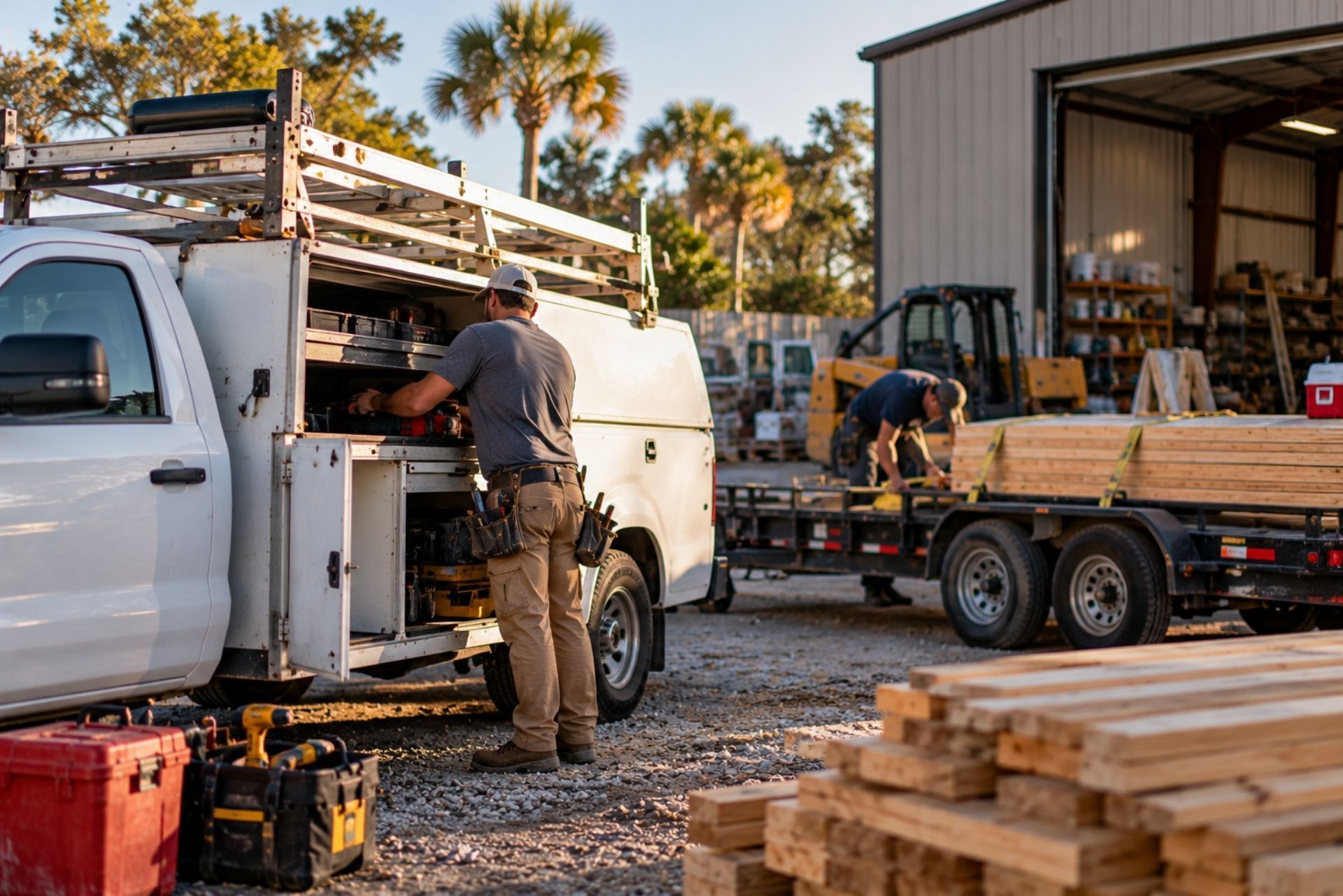
- Pickups with permanently mounted equipment, such as ladder racks, toolboxes, or plows
- Box trucks and dump trucks, including heavier units that trigger state filing requirements
- Food trucks and mobile service units
- Passenger vans and shuttles used by churches, non-profits, and healthcare providers
- Trailers towed for business purposes
Weight matters here. According to market data, intrastate commercial vehicles weighing 10,001 pounds or more must carry at least $300,000 in liability for non-hazardous freight. Interstate carriers fall under federal FMCSA standards, which typically require $750,000 to $1,000,000.
Ownership and Registration Requirements
Title and registration often settle the question before any underwriter asks about use. If a vehicle is titled to your LLC or corporation, a personal auto policy usually isn't an option. Personal policies are written for individuals and households, not business entities. Keeping the company truck in your own name to save a few dollars on premium can backfire, because it blurs the liability shield your business structure is supposed to provide.
The reverse problem also comes up a lot. An owner titles the vehicle personally but uses it almost entirely for the business, lists employees as drivers, and deducts it on taxes. Underwriters see that pattern constantly, and it's one of the most common reasons for a mid-term rewrite or a disputed claim.
Employee Drivers and Hired/Non-Owned Auto Liability
This is where the most expensive surprises happen. When an employee causes a crash while doing company business, the injured party's attorney will name your business, not just the driver. Your exposure doesn't depend on who owns the vehicle. It depends on whether the driver was working for you.
Protecting the Business When Employees Drive Personal Cars
Picture an office manager in Columbia picking up printer supplies in her own car and rear-ending someone at a red light on Two Notch Road. Her personal policy responds first. If the injuries exceed her limits, which could be as low as the state minimum, the claimant comes after your company for the rest.
Non-owned auto liability fills that gap. It protects the business, not the employee's car, when staff use personal vehicles for work tasks. It doesn't repair the employee's vehicle, and it doesn't replace their personal coverage. It does give your business its own defense and liability protection above whatever the employee carries.
A few habits help keep this coverage working for you:
- Collect proof of insurance from every employee who drives for work, and refresh it each year.
- Run motor vehicle records before handing anyone driving duties.
- Put a written policy in place on errands, passengers, and phone use.
Rented Vehicles and Temporary Business Use
Hired auto coverage handles vehicles your business rents, leases short-term, or borrows. Think of the Myrtle Beach caterer renting a box truck for a wedding weekend, or a Florence manufacturer renting a van for a trade show in Greenville. Without hired auto coverage, you're left choosing between the rental counter's expensive damage waiver and your personal policy, which may exclude commercial rentals.
Hired and non-owned coverage is often bundled together. It's usually inexpensive and can be added to a commercial auto policy or sometimes to a business owner's policy. For businesses that don't own any vehicles, it's one of the best-value protections available.
South Carolina Minimums vs. Recommended Business Limits
South Carolina requires a 25/50/25 split-limit structure for registered vehicles: $25,000 for bodily injury per person, $50,000 per accident, and $25,000 for property damage. The state also requires uninsured motorist coverage at matching limits. That's the legal floor, and for a business it's a dangerously thin one.
Here's the math that worries agents. A single trip to the emergency room after a crash, with imaging and a short hospital stay, can easily eat a $25,000 per-person limit. Property damage of $25,000 doesn't go far when your van hits a late-model pickup or damages a storefront. Anything above your limits becomes a judgment against the business.
Most business owners should treat these limits as a starting point for discussion, not a recommendation:
- Light business use with personal vehicles: Consider at least 100/300/100 on the personal policy, plus non-owned coverage for the company.
- Service vans and pickups: A $1,000,000 combined single limit is common and often required by commercial contracts.
- Heavier trucks: Remember that units over 10,000 pounds hauling intrastate freight need at least $300,000, and interstate operations face federal requirements.
- Everyone: A commercial umbrella adds affordable protection above your auto limits.
Underinsured motorist coverage deserves a look too. South Carolina has plenty of drivers carrying only the minimum, and UIM protects your drivers when the at-fault party can't cover the damage.
Comparing Policy Features and Average Costs
Price is usually the first question, and it's fair to ask. As of June 2026, market data puts the average annual cost of full coverage personal auto insurance in South Carolina at about $3,063, while minimum liability-only coverage averages around $1,100. Commercial premiums vary much more because they depend on vehicle type, radius of operation, cargo, driver records, and limits. A florist's single cargo van and a contractor's fleet of dump trucks live in different pricing worlds.
What drives commercial costs up? Long-haul radius, young or poorly rated drivers, heavy vehicles, and garaging in high-traffic coastal areas. What brings them down? Clean MVRs, telematics programs, safety training, higher deductibles, and bundling with general liability. Many owners end up surprised that the commercial premium isn't dramatically higher than their personal policy once the right discounts apply.
The cheapest option is rarely the personal policy that denies your claim. A denied $80,000 injury claim costs far more than several years of the premium difference.
Comparison Table: Personal vs. Commercial Benefits
| Feature | Personal Auto | Commercial Auto |
|---|---|---|
| Typical vehicles | Cars, SUVs, light pickups | Vans, trucks, trailers, fleets |
| Business-titled vehicles | Usually not eligible | Yes |
| Employee drivers | Limited, household-focused | Broad driver schedules |
| Hired/non-owned coverage | Not available | Available as an add-on |
| Liability limits | Lower caps | Up to $1M+ and umbrella-ready |
| Equipment and signage | Often excluded | Can be endorsed |
| Regulatory filings | None | Supports state and federal filings |
| Cost | Lower base premium | Higher, but scaled to real risk |
Common Questions About SC Business Auto Insurance
Can I use my personal car insurance for my small business in South Carolina? Yes, for light, incidental driving like client meetings or bank runs. Once you're hauling goods, carrying paying passengers, or letting employees drive, you likely need commercial coverage.
Does my business need insurance if employees drive their own cars? It should. Non-owned auto liability protects your company if an employee causes a crash while running work errands and their own limits fall short.
What happens if I get in an accident doing DoorDash or deliveries on a personal policy? Many personal policies exclude delivery for pay. Some carriers sell a delivery endorsement, so check before you start driving.
Is commercial auto insurance more expensive than personal? Usually, though the gap depends on your vehicle, drivers, and limits. Discounts for clean records and bundling can narrow it a lot.
Do I need commercial insurance for a truck titled to my LLC? In most cases, yes. Personal policies are generally written for individuals, so business-titled vehicles need a commercial policy.
Will my rental car coverage work on a business trip?
Not always. Hired auto coverage is the reliable way to protect your company when you rent vehicles for work.
Making the Right Choice for Your Small Business
The right setup depends on honest answers about how your vehicles really get used. If you only drive to occasional meetings, a personal policy with a business use rating may be enough. If you own work vehicles, title them to your company, or put employees behind the wheel, a commercial policy with hired and non-owned coverage is the safer path. And no matter which route you take, the 25/50/25 state minimum is far too thin for a business with assets to protect.
An independent agency can compare multiple carriers side by side instead of steering you toward one company's products. CSP Insurance Services has worked with South Carolina businesses since 1939, and you'll talk with a real person rather than a call center. You can read more about commercial auto options in South Carolina to see what fits your operation.
If you're unsure whether your current policy matches your driving, a quick review costs nothing.
Request a Quote and we'll walk through your vehicles, drivers, and limits with you. Finding the gap now is far easier than finding it on a claim form.
About the author
Lawson Walker, CIC
I'm proud to be part of an agency that's served Florence since 1939. CSP Insurance Services started as Cormell-Streett & Patterson, built by people who believed insurance should be personal — and more than eight decades later, that conviction still drives everything we do. Commitment, Service, Protection isn't just what CSP stands for; it's how I approach every client relationship.
As an independent, Trusted Choice agency, we aren't tied to any single carrier. That means I work for you — shopping multiple companies to match you with coverage that actually fits your family, your business, and your budget. No call centers, no chatbots. Just a local expert who takes the time to understand what matters to you and stands by you when it counts.
Whether you're protecting your home, your car, or a business you've spent years building, I'd be glad to help you find the right coverage.
Recent Posts