

CSP Insurance Services was founded in 1939, when Clifford Cormell joined Earnest Streett to sell insurance in Florence. More than 80 years later, we still answer the phone ourselves. No call centers, no chatbots — just a local team that knows your name and your policy.
We compare several carriers to find a policy that fits you, not one company's products.
◆
80+ years local experience
Hospital bills, treatment, and prescriptions for a work-related injury or illness.
Medical expenses
Claims history
| Feature | Short-Term Disability | Long-Term Disability |
|---|---|---|
| Waiting Period | 7-14 days | 90-180 days |
| Benefit Duration | Up to 26 weeks | 2 years to age 65+ |
| Income Replacement | 60%-70% | 50%-60% |
| Common Claims | Surgery recovery, pregnancy, fractures | Cancer, heart disease, chronic conditions |
| Typical Cost | $0.10-$0.50 per $100 of payroll | $0.20-$0.60 per $100 of payroll |
| Best For | Bridging short absences | Protecting against career-ending events |
| General Liability | Professional Liability | |
|---|---|---|
| What it covers | Bodily injury, property damage, personal injury on premises | Errors in care, negligent supervision, failure to follow care plans |
| Example claim | Visitor slips on wet floor | Staff administers wrong medication dosage |
| Typical limits | $1M per occurrence / $2M aggregate | $1M per occurrence / $3M aggregate |
| Average cost | ~$91/month for social service providers | $100-$200/month depending on services |
| Who files claims | Visitors, vendors, third parties | Residents, families, guardians |
General liability insurance for social service organizations currently averages about $91 per month for a $1M/$2M policy. Professional liability typically runs higher because the claims tend to be more complex and costly. Skipping either one is a mistake I've seen operators make, usually because they assume one policy covers everything.
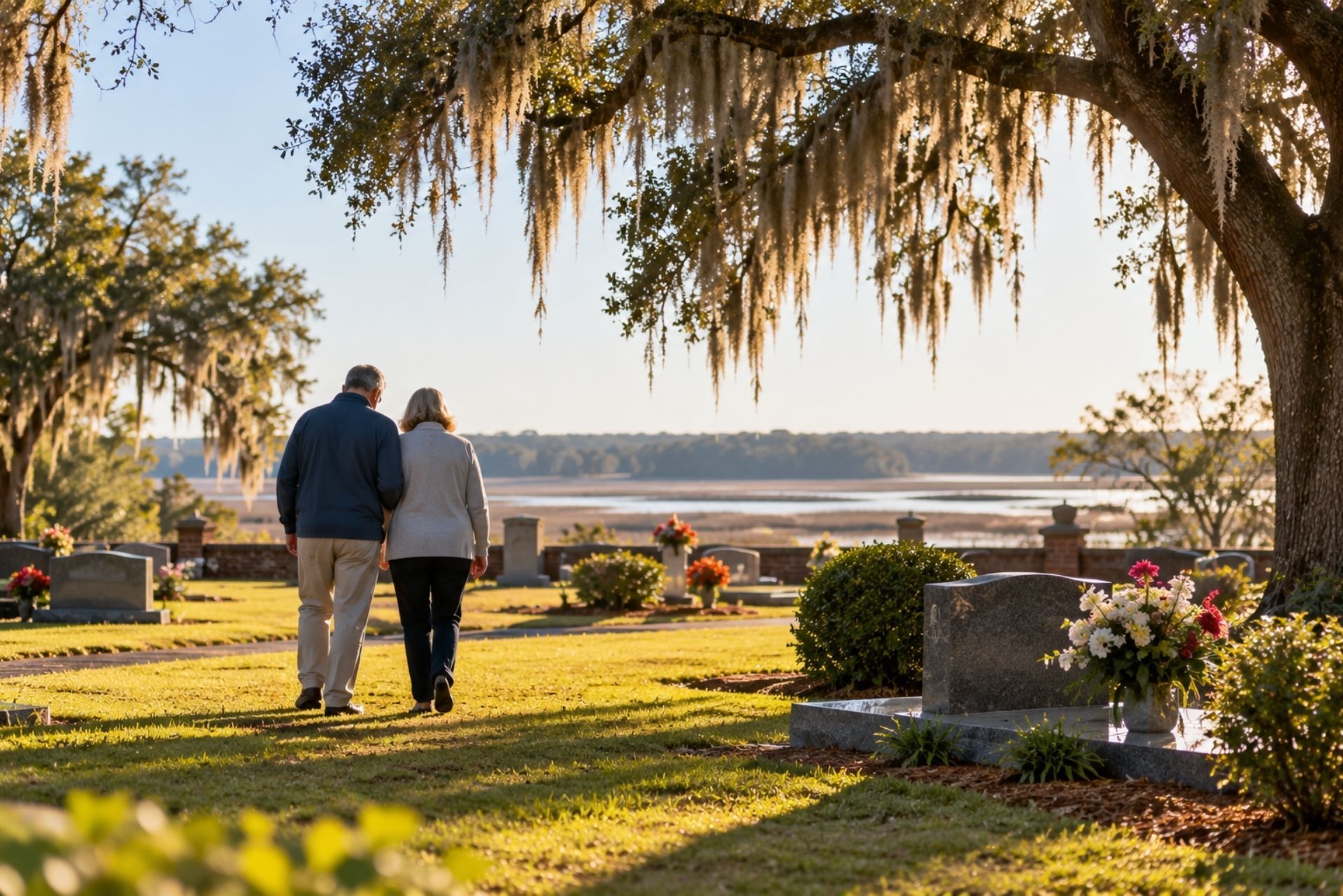
Picture a family in Florence sitting at a funeral home three days after losing their mother. The director slides a price sheet across the table, and nobody in the room knows whether Mom had a policy or where the paperwork might be. That scene happens across South Carolina every week, and it's almost always avoidable.
Final expense and burial insurance exists so that conversation goes differently. These small whole life policies pay a modest, predictable benefit that your family can use for a casket, a plot, an outstanding hospital bill, or travel for relatives coming home to Rock Hill or the Grand Strand. They're less complicated than most life insurance, but they come with real choices: how much to buy, whether to answer health questions, who gets the money, and how much you'll pay each month.
This guide covers each of those decisions for South Carolina buyers, with state laws, practical numbers, and the mistakes we see people make when they buy in a hurry. If you're shopping for yourself or helping a parent compare options, you'll find what matters here and can skip the sales pitch.
Understanding Final Expense Insurance in South Carolina
Final expense insurance is a type of whole life policy with a small face amount, built to cover end-of-life bills rather than to replace income for decades. "Burial insurance" and "funeral insurance" usually describe the same product. The policy builds a little cash value, the premium is locked in, and the coverage lasts as long as you keep paying.
The reason this product exists comes down to cost. The median price of a traditional funeral with viewing and burial in South Carolina runs roughly $8,396 to $8,570 as of late 2026, and that figure often leaves out the cemetery plot, opening and closing the grave, a headstone, and the reception afterward. Families in Columbia or Myrtle Beach who choose cremation spend less, but they still face bills arriving within days, long before any estate gets settled.
One distinction confuses many people: final expense insurance is not the same as a preneed contract. A preneed contract is sold by a funeral home and locks in specific goods and services. In South Carolina, funeral homes must hold a specific state license to sell preneed contracts, and those funds have to sit in a trust or an insurance policy.
A final expense policy pays cash to a
named person. That person can use it at any funeral home, in any state, for any purpose. That flexibility matters if you move to be near grandkids in Charlotte or if your family later prefers a different provider.


Your CSP agent
Lawson Walker, CIC
Insurance Sales
On this page
CSP Insurance Services is a fully licensed independent insurance agency serving individuals, families, and businesses across South Carolina.
From our home in Florence, we proudly serve clients in Florence, Myrtle Beach, Rock Hill, Columbia, and communities throughout South Carolina. As an independent Trusted Choice agency, our team works with a wide range of top-rated carriers to provide personal and commercial coverage — home, auto, business, life, and more — tailored to the real needs of the people and businesses we protect.
By City
Fine Arts and High-Value Specialized Goods
Galleries, auction houses, and even corporate offices with art collections need specialized coverage. Standard property policies cap fine art at absurdly low limits, sometimes $2,500 per item. A fine arts floater provides agreed-value coverage, meaning you and the insurer agree on the item's worth upfront. If it's damaged or stolen, that's what you get paid.
Boat and Watercraft Coverage for Weekend Adventures
Your homeowners policy might cover a small kayak or canoe, but anything with a motor typically needs its own policy. Boat insurance covers physical damage to the vessel, liability for injuries or property damage you cause on the water, and sometimes towing and salvage costs.
Lake-specific risks differ from coastal ones. A boat kept at Myrtle Beach faces saltwater corrosion, hurricane exposure, and higher theft rates than one stored at a private dock on Lake Wateree. Your policy should reflect where you keep and operate the boat. An independent agency like CSP Insurance Services can compare quotes across multiple marine carriers to find coverage that actually matches your boating habits rather than forcing you into a one-size-fits-all plan.
| Feature | Admitted (Standard) Carriers | Non-Admitted (E&S) Carriers |
|---|---|---|
| State regulation | Fully regulated; rates filed with state | Exempt from rate filing; flexible pricing |
| Guaranty fund protection | Yes: state fund covers claims if carrier fails | No: no guaranty fund backstop |
| Policy forms | Standardized (ISO forms common) | Manuscript or custom forms |
| Risk appetite | Prefers low-to-moderate risk | Accepts high-risk and unusual exposures |
| Premium cost | Generally lower | Typically 20-75% higher |
| Surplus lines tax | Not applicable | Buyer pays state surplus lines tax (varies 2-5%) |
| Speed of placement | Standard timelines | Can be faster or slower depending on complexity |
Computer Equipment and Data Storage

Businesses increasingly rely on portable tech: laptops, tablets, external drives, and mobile servers. A computer equipment floater covers these items when employees take them off-site, whether that's a sales rep carrying a laptop to a client meeting in Columbia or a nonprofit transporting presentation equipment to a fundraiser. Some policies even cover the cost of data restoration, which can be more expensive than the hardware itself.
Common Coverage Amounts and Benefit Limits
Most people buy far less coverage than they would with term life insurance, and that's by design. Final expense policies are sold in small increments, and carriers set their own minimums and maximums. Those limits also shift with your age and the underwriting class you qualify for.
Here's how we suggest clients think about sizing a policy. Start with the funeral itself, using that $8,400 to $8,600 median as a baseline for a traditional service. Then add the items families forget:
- Cemetery costs: plot, vault or liner, opening and closing, and a marker
- Final medical bills: copays and deductibles from a last hospital or hospice stay
- Small debts: a credit card or car payment the family wants to clear
- Travel and time off: plane tickets and lodging for relatives coming in for the service
- A cushion: prices rise, and a policy bought at 62 might not pay out until 85
For many South Carolina families, that math lands somewhere between a basic cremation figure and a full traditional burial with a little extra. A couple in Sumter planning simple cremations needs far less than a widow in Conway who wants a church service and burial next to her husband.
One thing to keep in mind is that guaranteed issue policies usually carry lower maximums than simplified issue policies. If you need a larger benefit and can qualify medically, the health questions are usually worth answering.
Factors That Influence Your Premium Costs
Several variables drive what you'll pay:
- Specialty: Neurosurgeons pay far more than internists
- Claims history: Prior claims increase your rates, sometimes dramatically
- Location: Urban areas with higher jury awards tend to cost more
- Policy type: Occurrence policies cost more than claims-made
- Coverage limits: Higher limits mean higher premiums
- Years in practice: New physicians sometimes pay less initially on claims-made policies (the "step" or "mature" rate system)
The trend line isn't encouraging. Malpractice claims data for 2026 shows continued growth in both claim frequency and severity, meaning premiums are likely to keep rising. Shopping your coverage through an independent agency that compares multiple carriers can save you thousands annually without sacrificing protection.
For most commercial projects, extended coverage with appropriate endorsements is the smarter choice. The premium difference is often modest compared to the potential gap in coverage.
Underwriting: Simplified Issue vs. Guaranteed Issue
Underwriting is how an insurance company decides whether to offer you a policy and at what price. Final expense insurance skips the paramedical exam that traditional life insurance often requires. Instead, carriers fall into two broad camps, and which one you land in affects your price, your coverage limit, and when the full benefit kicks in.
The Role of Health Questionnaires
Simplified issue policies ask a short list of yes-or-no health questions. Typical topics include recent cancer treatment, heart attack or stroke, kidney dialysis, oxygen use, and whether you're confined to a nursing home. Many carriers also run a prescription history check and a review of the MIB database, so leaving out a condition rarely works.
The most expensive mistake we see is someone fudging an answer to get a better rate. If you die within the contestability period, the insurer can review your application, and a misstatement can lead to a denied claim with the premiums refunded. Your family ends up with a few thousand dollars in returned premiums instead of the benefit they counted on.
Honest answers can still get you a great policy. Many carriers accept well-controlled diabetes, high blood pressure, and even past cancer after a set amount of time. Each company weighs conditions differently, which is exactly why comparing several carriers pays off.
Waiting Periods for Guaranteed Acceptance
Guaranteed issue policies ask no health questions at all. If you're within the age range, you're approved. The tradeoff is a graded or modified death benefit, commonly lasting two years.
During that waiting period, a death from natural causes usually returns the premiums paid plus some interest rather than the full face amount. Accidental death is typically covered in full from day one. After the waiting period ends, the policy pays the full benefit for any cause.
Guaranteed issue makes sense for someone with serious current health problems who would be declined elsewhere. For anyone else, it's often the costlier choice with a worse benefit structure.
Boat and Watercraft Coverage for Weekend Adventures
Your homeowners policy might cover a small kayak or canoe, but anything with a motor typically needs its own policy. Boat insurance covers physical damage to the vessel, liability for injuries or property damage you cause on the water, and sometimes towing and salvage costs.
Lake-specific risks differ from coastal ones. A boat kept at Myrtle Beach faces saltwater corrosion, hurricane exposure, and higher theft rates than one stored at a private dock on Lake Wateree. Your policy should reflect where you keep and operate the boat. An independent agency like CSP Insurance Services can compare quotes across multiple marine carriers to find coverage that actually matches your boating habits rather than forcing you into a one-size-fits-all plan.
Boat and Watercraft Coverage for Weekend Adventures
Your homeowners policy might cover a small kayak or canoe, but anything with a motor typically needs its own policy. Boat insurance covers physical damage to the vessel, liability for injuries or property damage you cause on the water, and sometimes towing and salvage costs.
Lake-specific risks differ from coastal ones. A boat kept at Myrtle Beach faces saltwater corrosion, hurricane exposure, and higher theft rates than one stored at a private dock on Lake Wateree. Your policy should reflect where you keep and operate the boat. An independent agency like CSP Insurance Services can compare quotes across multiple marine carriers to find coverage that actually matches your boating habits rather than forcing you into a one-size-fits-all plan.
| Feature | Admitted (Standard) Carriers | Non-Admitted (E&S) Carriers |
|---|---|---|
| State regulation | Fully regulated; rates filed with state | Exempt from rate filing; flexible pricing |
| Guaranty fund protection | Yes: state fund covers claims if carrier fails | No: no guaranty fund backstop |
| Policy forms | Standardized (ISO forms common) | Manuscript or custom forms |
| Risk appetite | Prefers low-to-moderate risk | Accepts high-risk and unusual exposures |
| Premium cost | Generally lower | Typically 20-75% higher |
| Surplus lines tax | Not applicable | Buyer pays state surplus lines tax (varies 2-5%) |
| Speed of placement | Standard timelines | Can be faster or slower depending on complexity |
This is a policy feature that doesn't get enough attention. A consent-to-settle clause gives you the right to approve or reject any settlement offer your insurer wants to make. Without it, your carrier can settle a claim you believe is meritless, and that settlement goes on your record.
Some policies include a "hammer clause" instead: if you refuse a settlement the insurer recommends and the case goes to trial with a worse outcome, you're responsible for the difference. Understanding this clause before you buy a policy is critical. At CSP Insurance Services, their team walks clients through these policy details line by line, which matters because the fine print in malpractice policies can have career-altering consequences.
The Role of Consent-to-Settle Clauses
Errors and Omissions (E&O) for Design Flaws
If your shop does any design work, engineering consultation, or CAD/CAM programming for clients, E&O insurance is essential. This covers claims where your professional judgment or technical expertise leads to a client's financial loss.
A common scenario: your shop designs a custom fixture based on a client's rough specifications, the fixture fails during production, and the client claims your design was flawed. Without E&O coverage, you're defending that claim and paying any settlement from your own funds. Product recall insurance trends in 2026 show that insurers are paying closer attention to design-related exposures, which means getting E&O in place now is smarter than waiting until underwriting tightens further.
Comparing Policy Types and Features
The three main policy designs look similar on paper but behave very differently when a claim happens. Here's a side-by-side view:
| Feature | Level Benefit (Simplified) | Graded Benefit | Guaranteed Issue |
|---|---|---|---|
| Health questions | Yes, short list | Yes, fewer approvals | None |
| Full payout starts | Day one | After 2-3 years | Usually after 2 years |
| Relative premium | Lowest | Middle | Highest |
| Max coverage | Highest | Moderate | Lowest |
| Best fit | Fairly stable health | Some serious conditions | Major health issues |
Beyond the benefit type, look closely at a few riders and features. An accelerated death benefit rider lets the insured access part of the money if diagnosed with a terminal illness. Some policies include an accidental death rider that doubles the payout for accidents.
Cash value is another feature people overlook. It grows slowly, and you can borrow against it, but loans reduce the death benefit if they aren't repaid. We don't recommend buying final expense insurance as a savings plan, though it helps to know the value is there.
Watch out for policies that look cheap because premiums increase every five years. Final expense coverage should have level premiums for life. If the illustration shows the price climbing, keep shopping.
Specialty Lines: Flood, Earthquake, and Valuable Items
Flood insurance is a separate policy, typically written through FEMA's National Flood Insurance Program or a private carrier. If your home sits in a designated flood zone anywhere along the SC coast or near inland rivers, your mortgage lender will require it. But even homes outside mapped flood zones can flood: roughly 25% of flood claims come from properties in low-to-moderate risk areas.
Earthquake coverage is less common in South Carolina, but the state sits near the Charleston fault zone, which produced a magnitude 7.3 quake in 1886. A rider or standalone earthquake policy is worth considering if you're in the Lowcountry.
Scheduled personal property endorsements cover high-value items like jewelry, art, firearms, or musical instruments that exceed standard policy sub-limits. Most homeowners policies cap jewelry coverage at $1,500-$2,500 per item. If your engagement ring is worth $8,000, you need a scheduled endorsement or inland marine floater to cover the difference.
FAQ: What counts as a disability? Does it cover mental health? Are benefits taxable?
What qualifies as a disability under most group plans? Most policies define disability as the inability to perform the essential duties of your own occupation (for the first 1-2 years) and later shift to an "any occupation" standard. The exact definition varies by carrier and policy, so reading the contract language matters.
Does disability insurance cover mental health conditions? Yes, most modern group disability policies cover mental health conditions like depression, anxiety, and PTSD. However, many policies limit mental health claims to 24 months of benefits, even if the overall policy pays to age 65. Ask about this limitation before you buy.
Are disability benefits taxable? It depends on who pays the premium. If the employer pays, benefits are taxable to the employee. If the employee pays with after-tax dollars, benefits are received tax-free.
Can employees receive both workers' comp and disability benefits? Generally, no. Most disability policies include an offset provision that reduces benefits by the amount of workers' compensation received. The two programs are designed to complement each other, not stack.
Is there a waiting period before new employees can enroll? Most group plans allow employers to set an eligibility waiting period, commonly 30, 60, or 90 days. South Carolina doesn't regulate this waiting period for disability coverage, so it's up to the employer.
What happens if an employee is partially disabled? Many LTD policies include a partial or residual disability benefit that pays a reduced amount if the employee can work part-time but not full-time. This feature encourages return-to-work efforts while still providing financial support.
Factors That Influence Your Monthly Premiums
Several factors drive your builders risk premium. Project type matters: a wood-frame apartment complex costs more to insure than a concrete tilt-up warehouse. Location is significant, especially in South Carolina where coastal proximity affects wind/hail rates dramatically. A project in Florence will price very differently from one on the Grand Strand.
Other factors include project duration, the contractor's loss history, protective safeguards on-site (fencing, security cameras, fire extinguishers), and the deductible you choose. Premiums typically run between 1% and 4% of the total project value, though market conditions in early 2026 have pushed rates toward the lower end for well-managed projects.
Usually, yes. A single claim can increase your premiums by 10% to 30% or more, depending on the severity and outcome. Some carriers offer claims-free discounts that you'd lose. That said, a claim that's dismissed or results in no payout has less impact than one with a large settlement. Shopping your renewal through an independent agent can help offset rate increases by comparing offers from competing carriers.
FAQ: Will my rates go up if I have one claim?
Apartment complex insurance isn't a single policy: it's a coordinated set of coverages that work together to protect your buildings, your income, your employees, and your financial future. The right package includes general liability, commercial property, workers comp, commercial auto, and specialized add-ons like loss of rental income and equipment breakdown. Skipping any one of these creates a gap that a single bad claim can exploit.
The most effective approach is working with an independent agency that can compare options across multiple carriers. CSP Insurance Services has been helping South Carolina property owners build customized coverage programs since 1939, with direct access to real people who understand multifamily risk. If you're unsure whether your current coverage matches your actual exposure, or if you're purchasing a new complex and need to build a policy from scratch, request a quote to get a personalized analysis of your insurance needs. A 20-minute conversation now can save you six figures when a claim hits.
Does general liability cover fuel spills?
Usually not. Most GL policies contain pollution exclusions that specifically exclude fuel spills and environmental contamination. You need a separate pollution liability policy to cover cleanup costs, third-party damages, and regulatory fines from fuel releases.
Designating and Managing Your Beneficiaries
The beneficiary designation decides who gets the check, and it overrides your will. If your will says the house goes to your son but your policy still names your ex-husband from 1988, the insurance money goes to your ex-husband. We've watched families deal with that exact mess.
Name a primary beneficiary and at least one contingent beneficiary. If your primary dies before you and no contingent is listed, the proceeds can end up in your estate, which slows everything down and exposes the money to probate. Funeral homes don't wait on probate.
South Carolina law gives families one meaningful protection here. Life insurance proceeds paid to a spouse, child, or dependent are exempt from creditors' claims, so lingering medical bills generally can't swallow the benefit before your family uses it. Naming those relatives directly, rather than your estate, helps preserve that protection.
A few practical habits help:
- Avoid naming minors directly: an insurer can't pay a child outright, and a court may need to appoint a guardian of the money
- Tell your beneficiary: they need to know the policy exists and which company holds it
- Review after big life events: marriage, divorce, a death in the family, or a falling out
- Keep a copy accessible: not locked in a safe deposit box only you can open
If an insurer stalls on a legitimate claim, South Carolina law offers leverage of its own. An insurer that refuses to pay within 30 days of a demand without reasonable cause may owe the beneficiary's attorney fees.
Boat and Watercraft Coverage for Weekend Adventures
Your homeowners policy might cover a small kayak or canoe, but anything with a motor typically needs its own policy. Boat insurance covers physical damage to the vessel, liability for injuries or property damage you cause on the water, and sometimes towing and salvage costs.
Lake-specific risks differ from coastal ones. A boat kept at Myrtle Beach faces saltwater corrosion, hurricane exposure, and higher theft rates than one stored at a private dock on Lake Wateree. Your policy should reflect where you keep and operate the boat. An independent agency like CSP Insurance Services can compare quotes across multiple marine carriers to find coverage that actually matches your boating habits rather than forcing you into a one-size-fits-all plan.
Boat and Watercraft Coverage for Weekend Adventures
Your homeowners policy might cover a small kayak or canoe, but anything with a motor typically needs its own policy. Boat insurance covers physical damage to the vessel, liability for injuries or property damage you cause on the water, and sometimes towing and salvage costs.
Lake-specific risks differ from coastal ones. A boat kept at Myrtle Beach faces saltwater corrosion, hurricane exposure, and higher theft rates than one stored at a private dock on Lake Wateree. Your policy should reflect where you keep and operate the boat. An independent agency like CSP Insurance Services can compare quotes across multiple marine carriers to find coverage that actually matches your boating habits rather than forcing you into a one-size-fits-all plan.
| Feature | Admitted (Standard) Carriers | Non-Admitted (E&S) Carriers |
|---|---|---|
| State regulation | Fully regulated; rates filed with state | Exempt from rate filing; flexible pricing |
| Guaranty fund protection | Yes: state fund covers claims if carrier fails | No: no guaranty fund backstop |
| Policy forms | Standardized (ISO forms common) | Manuscript or custom forms |
| Risk appetite | Prefers low-to-moderate risk | Accepts high-risk and unusual exposures |
| Premium cost | Generally lower | Typically 20-75% higher |
| Surplus lines tax | Not applicable | Buyer pays state surplus lines tax (varies 2-5%) |
| Speed of placement | Standard timelines | Can be faster or slower depending on complexity |
This is a policy feature that doesn't get enough attention. A consent-to-settle clause gives you the right to approve or reject any settlement offer your insurer wants to make. Without it, your carrier can settle a claim you believe is meritless, and that settlement goes on your record.
Some policies include a "hammer clause" instead: if you refuse a settlement the insurer recommends and the case goes to trial with a worse outcome, you're responsible for the difference. Understanding this clause before you buy a policy is critical. At CSP Insurance Services, their team walks clients through these policy details line by line, which matters because the fine print in malpractice policies can have career-altering consequences.
The Role of Consent-to-Settle Clauses
Factors That Influence Monthly Premiums
Final expense premiums are priced per $1,000 of coverage, and several factors move that number. Since premiums are locked once you buy, the rate you qualify for on the day of approval is the rate you'll pay for life. That makes timing and preparation more valuable than people expect.
Your underwriting class is the biggest single factor. A healthy applicant who qualifies for level benefits pays noticeably less than someone placed in a graded plan, and both pay less than a guaranteed issue buyer for the same face amount. The coverage amount matters too, obviously, and many carriers charge a small annual policy fee regardless of size.
Payment method can matter as well. Some carriers offer a modest discount for annual payment or automatic bank draft compared with paying by mail.
Age and Gender Impact on Rates
Rates climb with each birthday, and the jumps grow steeper in your 70s and 80s. Someone buying at 60 locks in a far lower price than a person who waits until 75. Some carriers use "age nearest birthday," so your price may change up to six months before your actual birthday.
Women generally pay less than men of the same age and health because they live longer on average. A married couple in Lexington buying matching policies will often see different premiums for that reason alone.
Tobacco Use and Lifestyle Considerations
Tobacco use is one of the largest rate factors you control. Most carriers classify cigarettes, chewing tobacco, and often vaping or nicotine patches as tobacco use, and smokers can pay substantially more. Many companies require 12 months tobacco-free before granting non-tobacco rates.
Your height and weight also matter, since carriers use build charts. Recent DUIs or hazardous hobbies can affect eligibility with certain companies. Answer honestly here too, because prescription and medical records usually reveal the truth.
Specialty Lines: Flood, Earthquake, and Valuable Items
Flood insurance is a separate policy, typically written through FEMA's National Flood Insurance Program or a private carrier. If your home sits in a designated flood zone anywhere along the SC coast or near inland rivers, your mortgage lender will require it. But even homes outside mapped flood zones can flood: roughly 25% of flood claims come from properties in low-to-moderate risk areas.
Earthquake coverage is less common in South Carolina, but the state sits near the Charleston fault zone, which produced a magnitude 7.3 quake in 1886. A rider or standalone earthquake policy is worth considering if you're in the Lowcountry.
Scheduled personal property endorsements cover high-value items like jewelry, art, firearms, or musical instruments that exceed standard policy sub-limits. Most homeowners policies cap jewelry coverage at $1,500-$2,500 per item. If your engagement ring is worth $8,000, you need a scheduled endorsement or inland marine floater to cover the difference.
FAQ: What counts as a disability? Does it cover mental health? Are benefits taxable?
What qualifies as a disability under most group plans? Most policies define disability as the inability to perform the essential duties of your own occupation (for the first 1-2 years) and later shift to an "any occupation" standard. The exact definition varies by carrier and policy, so reading the contract language matters.
Does disability insurance cover mental health conditions? Yes, most modern group disability policies cover mental health conditions like depression, anxiety, and PTSD. However, many policies limit mental health claims to 24 months of benefits, even if the overall policy pays to age 65. Ask about this limitation before you buy.
Are disability benefits taxable? It depends on who pays the premium. If the employer pays, benefits are taxable to the employee. If the employee pays with after-tax dollars, benefits are received tax-free.
Can employees receive both workers' comp and disability benefits? Generally, no. Most disability policies include an offset provision that reduces benefits by the amount of workers' compensation received. The two programs are designed to complement each other, not stack.
Is there a waiting period before new employees can enroll? Most group plans allow employers to set an eligibility waiting period, commonly 30, 60, or 90 days. South Carolina doesn't regulate this waiting period for disability coverage, so it's up to the employer.
What happens if an employee is partially disabled? Many LTD policies include a partial or residual disability benefit that pays a reduced amount if the employee can work part-time but not full-time. This feature encourages return-to-work efforts while still providing financial support.
Factors That Influence Your Monthly Premiums
Several factors drive your builders risk premium. Project type matters: a wood-frame apartment complex costs more to insure than a concrete tilt-up warehouse. Location is significant, especially in South Carolina where coastal proximity affects wind/hail rates dramatically. A project in Florence will price very differently from one on the Grand Strand.
Other factors include project duration, the contractor's loss history, protective safeguards on-site (fencing, security cameras, fire extinguishers), and the deductible you choose. Premiums typically run between 1% and 4% of the total project value, though market conditions in early 2026 have pushed rates toward the lower end for well-managed projects.
Usually, yes. A single claim can increase your premiums by 10% to 30% or more, depending on the severity and outcome. Some carriers offer claims-free discounts that you'd lose. That said, a claim that's dismissed or results in no payout has less impact than one with a large settlement. Shopping your renewal through an independent agent can help offset rate increases by comparing offers from competing carriers.
FAQ: Will my rates go up if I have one claim?
Apartment complex insurance isn't a single policy: it's a coordinated set of coverages that work together to protect your buildings, your income, your employees, and your financial future. The right package includes general liability, commercial property, workers comp, commercial auto, and specialized add-ons like loss of rental income and equipment breakdown. Skipping any one of these creates a gap that a single bad claim can exploit.
The most effective approach is working with an independent agency that can compare options across multiple carriers. CSP Insurance Services has been helping South Carolina property owners build customized coverage programs since 1939, with direct access to real people who understand multifamily risk. If you're unsure whether your current coverage matches your actual exposure, or if you're purchasing a new complex and need to build a policy from scratch, request a quote to get a personalized analysis of your insurance needs. A 20-minute conversation now can save you six figures when a claim hits.
Does general liability cover fuel spills?
Usually not. Most GL policies contain pollution exclusions that specifically exclude fuel spills and environmental contamination. You need a separate pollution liability policy to cover cleanup costs, third-party damages, and regulatory fines from fuel releases.
Loss Discovery vs. Loss Sustained Forms
Crime policies come in two forms, and the difference matters. A loss-sustained form covers losses that occur during the policy period, even if discovered later (within a specified window). A loss-discovery form covers losses discovered during the policy period, regardless of when they occurred, as long as you didn't know about them before the policy started.
Discovery forms are more common and generally more favorable for the insured. If an employee has been stealing for two years and you discover it during your current policy period, a discovery form responds. Make sure you understand which form your policy uses.
South Carolina State Regulations and Consumer Rights
South Carolina regulates life insurance through the Department of Insurance, and state law builds in several protections for buyers. These rules apply to final expense policies just as they do to larger life insurance contracts. Knowing them helps you buy with more confidence and spot a bad actor faster.
Agents selling these policies must be licensed in South Carolina. If someone calls you uninvited with high-pressure tactics or asks for payment before showing you a policy, ask for their license number and verify it with the Department of Insurance. Legitimate agents expect the question.
The 10-Day Free Look Period
South Carolina gives you a 10-day free-look period to return a life insurance policy for a full refund. The clock usually starts when the policy is delivered to you. Use that window to read the actual contract, not just the brochure.
Check the benefit amount, whether it's level or graded, the premium schedule, and the beneficiary names. We've seen typos in beneficiary names and wrong birthdates slip through. Catching those in the first ten days saves a lot of trouble later.
South Carolina Life and Health Insurance Guaranty Association
What if the insurance company goes under? South Carolina's guaranty association steps in, providing up to $300,000 in death benefit protection per insured person. Since final expense policies fall far below that limit, nearly every policy is fully protected.
That said, the guaranty association is a safety net and not a reason to ignore carrier strength. Claims handled by a guaranty association can take longer. Choosing an insurer with solid financial ratings keeps things simple for your family.
Boat and Watercraft Coverage for Weekend Adventures
Your homeowners policy might cover a small kayak or canoe, but anything with a motor typically needs its own policy. Boat insurance covers physical damage to the vessel, liability for injuries or property damage you cause on the water, and sometimes towing and salvage costs.
Lake-specific risks differ from coastal ones. A boat kept at Myrtle Beach faces saltwater corrosion, hurricane exposure, and higher theft rates than one stored at a private dock on Lake Wateree. Your policy should reflect where you keep and operate the boat. An independent agency like CSP Insurance Services can compare quotes across multiple marine carriers to find coverage that actually matches your boating habits rather than forcing you into a one-size-fits-all plan.
Boat and Watercraft Coverage for Weekend Adventures
Your homeowners policy might cover a small kayak or canoe, but anything with a motor typically needs its own policy. Boat insurance covers physical damage to the vessel, liability for injuries or property damage you cause on the water, and sometimes towing and salvage costs.
Lake-specific risks differ from coastal ones. A boat kept at Myrtle Beach faces saltwater corrosion, hurricane exposure, and higher theft rates than one stored at a private dock on Lake Wateree. Your policy should reflect where you keep and operate the boat. An independent agency like CSP Insurance Services can compare quotes across multiple marine carriers to find coverage that actually matches your boating habits rather than forcing you into a one-size-fits-all plan.
| Feature | Admitted (Standard) Carriers | Non-Admitted (E&S) Carriers |
|---|---|---|
| State regulation | Fully regulated; rates filed with state | Exempt from rate filing; flexible pricing |
| Guaranty fund protection | Yes: state fund covers claims if carrier fails | No: no guaranty fund backstop |
| Policy forms | Standardized (ISO forms common) | Manuscript or custom forms |
| Risk appetite | Prefers low-to-moderate risk | Accepts high-risk and unusual exposures |
| Premium cost | Generally lower | Typically 20-75% higher |
| Surplus lines tax | Not applicable | Buyer pays state surplus lines tax (varies 2-5%) |
| Speed of placement | Standard timelines | Can be faster or slower depending on complexity |
This is a policy feature that doesn't get enough attention. A consent-to-settle clause gives you the right to approve or reject any settlement offer your insurer wants to make. Without it, your carrier can settle a claim you believe is meritless, and that settlement goes on your record.
Some policies include a "hammer clause" instead: if you refuse a settlement the insurer recommends and the case goes to trial with a worse outcome, you're responsible for the difference. Understanding this clause before you buy a policy is critical. At CSP Insurance Services, their team walks clients through these policy details line by line, which matters because the fine print in malpractice policies can have career-altering consequences.
The Role of Consent-to-Settle Clauses
Affordable Care Act (ACA) Employer Mandate
Any employer with 50 or more FTEs must offer affordable, minimum-value health coverage to at least 95% of full-time employees or face penalties. "Affordable" means the employee's share of the lowest-cost self-only plan can't exceed 9.02% of their household income in 2026. The ACA employer requirements for South Carolina businesses include detailed reporting obligations on Forms 1094-C and 1095-C, filed annually with the IRS.
The penalty for failing to offer coverage (the "sledgehammer" penalty) is roughly $2,970 per full-time employee beyond the first 30 in 2026. That's not per-month: that's annual, per person. For a 100-employee company, that's over $200,000.
Common Questions About South Carolina Burial Insurance
These come up constantly in our conversations with clients across the state.
Can I get burial insurance if I'm over 80? Yes. Many carriers issue final expense policies well into the 80s, though maximum coverage shrinks and premiums rise with age. Guaranteed issue options often have their own age cutoffs.
Do I need a medical exam? No. Final expense policies rely on health questions and database checks, or no questions at all for guaranteed issue. Most applications take a single phone call or meeting.
Will my premium go up as I get older? Not with a true final expense whole life policy. The premium stays level for life once issued, so avoid any plan that schedules increases.
Is a funeral home preneed plan better than burial insurance? It depends on whether you want to lock in a specific funeral home and services. Burial insurance pays cash to your beneficiary, which offers more flexibility if plans or locations change.
How fast does the money get paid? Many claims pay within a couple of weeks once the insurer receives the death certificate and claim form. Delays usually come from missing paperwork or a death within the contestability period.
Can I have more than one policy? Yes. Some people combine a small simplified issue policy with existing coverage from work, though employer coverage often ends at retirement.
Specialty Lines: Flood, Earthquake, and Valuable Items
Flood insurance is a separate policy, typically written through FEMA's National Flood Insurance Program or a private carrier. If your home sits in a designated flood zone anywhere along the SC coast or near inland rivers, your mortgage lender will require it. But even homes outside mapped flood zones can flood: roughly 25% of flood claims come from properties in low-to-moderate risk areas.
Earthquake coverage is less common in South Carolina, but the state sits near the Charleston fault zone, which produced a magnitude 7.3 quake in 1886. A rider or standalone earthquake policy is worth considering if you're in the Lowcountry.
Scheduled personal property endorsements cover high-value items like jewelry, art, firearms, or musical instruments that exceed standard policy sub-limits. Most homeowners policies cap jewelry coverage at $1,500-$2,500 per item. If your engagement ring is worth $8,000, you need a scheduled endorsement or inland marine floater to cover the difference.
FAQ: What counts as a disability? Does it cover mental health? Are benefits taxable?
What qualifies as a disability under most group plans? Most policies define disability as the inability to perform the essential duties of your own occupation (for the first 1-2 years) and later shift to an "any occupation" standard. The exact definition varies by carrier and policy, so reading the contract language matters.
Does disability insurance cover mental health conditions? Yes, most modern group disability policies cover mental health conditions like depression, anxiety, and PTSD. However, many policies limit mental health claims to 24 months of benefits, even if the overall policy pays to age 65. Ask about this limitation before you buy.
Are disability benefits taxable? It depends on who pays the premium. If the employer pays, benefits are taxable to the employee. If the employee pays with after-tax dollars, benefits are received tax-free.
Can employees receive both workers' comp and disability benefits? Generally, no. Most disability policies include an offset provision that reduces benefits by the amount of workers' compensation received. The two programs are designed to complement each other, not stack.
Is there a waiting period before new employees can enroll? Most group plans allow employers to set an eligibility waiting period, commonly 30, 60, or 90 days. South Carolina doesn't regulate this waiting period for disability coverage, so it's up to the employer.
What happens if an employee is partially disabled? Many LTD policies include a partial or residual disability benefit that pays a reduced amount if the employee can work part-time but not full-time. This feature encourages return-to-work efforts while still providing financial support.
Factors That Influence Your Monthly Premiums
Several factors drive your builders risk premium. Project type matters: a wood-frame apartment complex costs more to insure than a concrete tilt-up warehouse. Location is significant, especially in South Carolina where coastal proximity affects wind/hail rates dramatically. A project in Florence will price very differently from one on the Grand Strand.
Other factors include project duration, the contractor's loss history, protective safeguards on-site (fencing, security cameras, fire extinguishers), and the deductible you choose. Premiums typically run between 1% and 4% of the total project value, though market conditions in early 2026 have pushed rates toward the lower end for well-managed projects.
Usually, yes. A single claim can increase your premiums by 10% to 30% or more, depending on the severity and outcome. Some carriers offer claims-free discounts that you'd lose. That said, a claim that's dismissed or results in no payout has less impact than one with a large settlement. Shopping your renewal through an independent agent can help offset rate increases by comparing offers from competing carriers.
FAQ: Will my rates go up if I have one claim?
Apartment complex insurance isn't a single policy: it's a coordinated set of coverages that work together to protect your buildings, your income, your employees, and your financial future. The right package includes general liability, commercial property, workers comp, commercial auto, and specialized add-ons like loss of rental income and equipment breakdown. Skipping any one of these creates a gap that a single bad claim can exploit.
The most effective approach is working with an independent agency that can compare options across multiple carriers. CSP Insurance Services has been helping South Carolina property owners build customized coverage programs since 1939, with direct access to real people who understand multifamily risk. If you're unsure whether your current coverage matches your actual exposure, or if you're purchasing a new complex and need to build a policy from scratch, request a quote to get a personalized analysis of your insurance needs. A 20-minute conversation now can save you six figures when a claim hits.
Does general liability cover fuel spills?
Usually not. Most GL policies contain pollution exclusions that specifically exclude fuel spills and environmental contamination. You need a separate pollution liability policy to cover cleanup costs, third-party damages, and regulatory fines from fuel releases.
Loss Discovery vs. Loss Sustained Forms
Crime policies come in two forms, and the difference matters. A loss-sustained form covers losses that occur during the policy period, even if discovered later (within a specified window). A loss-discovery form covers losses discovered during the policy period, regardless of when they occurred, as long as you didn't know about them before the policy started.
Discovery forms are more common and generally more favorable for the insured. If an employee has been stealing for two years and you discover it during your current policy period, a discovery form responds. Make sure you understand which form your policy uses.
Making the Right Choice for Your Family
Smart final expense planning in South Carolina comes down to a few honest decisions: size the benefit to real local funeral costs, answer health questions truthfully so you get the best class you qualify for, name beneficiaries carefully, and lock in a level premium while you're younger. The state's free-look period and guaranty association give you breathing room and a safety net, but the strongest protection is choosing the right policy from the start.
Because underwriting rules vary so much from one carrier to the next, the same person can be declined by one company and approved at a good rate by another. CSP Insurance Services has worked with South Carolina families since 1939, and as an independent agency we compare multiple carriers instead of steering you toward one. You'll talk with a real person, not a call center.
If you want to see what coverage would actually cost for you or a parent, Request a Quote and we'll walk through the options together, with no pressure attached. A short conversation now spares your family a hard one at the funeral home later.
About the author
Lawson Walker, CIC
I'm proud to be part of an agency that's served Florence since 1939. CSP Insurance Services started as Cormell-Streett & Patterson, built by people who believed insurance should be personal — and more than eight decades later, that conviction still drives everything we do. Commitment, Service, Protection isn't just what CSP stands for; it's how I approach every client relationship.
As an independent, Trusted Choice agency, we aren't tied to any single carrier. That means I work for you — shopping multiple companies to match you with coverage that actually fits your family, your business, and your budget. No call centers, no chatbots. Just a local expert who takes the time to understand what matters to you and stands by you when it counts.
Whether you're protecting your home, your car, or a business you've spent years building, I'd be glad to help you find the right coverage.
We compare several carriers to find a policy that fits you, not one company's products.
◆
80+ years local experience

1939
Serving SC
Most Requested
Core business coverage.
The policies most South Carolina businesses start with.

Commercial Property
Protect the building, equipment, and inventory your business runs on, so a covered fire, theft, or storm doesn’t become a closed door.

Workers Compensation
Required for most South Carolina employers with staff. It covers medical bills and lost wages when an employee is hurt on the job.

Commercial Auto
Cars, trucks, and fleets used for work need more than a personal policy. This handles liability, damage, and your drivers.

General Liability
Accidents happen on the job and on your property. General liability covers third-party injury and property damage claims against your business.

Inland Marine
Tools, equipment, and goods on the move aren’t covered by standard property policies. Inland marine protects them wherever they travel.

Business Owners (BOP)
A business owners policy bundles property and liability coverage into one package, often at a better price for small businesses.
We compare several carriers to find a policy that fits you, not one company's products.
◆
80+ years local experience
1939
Serving SC

Insurance Sales
J. Roger Jordan, CIC
[CONFIRM bio]
Personal Insurance
Coverage for your home, vehicles, and family.
Protect what matters most with personal policies shopped across our carriers.
Home
Your house is likely your largest investment. Home insurance helps rebuild after covered damage and protects you from liability.
Auto
South Carolina drivers need real protection. Auto coverage handles liability, collision, medical costs, and uninsured drivers.
Umbrella
When a serious claim climbs past your home or auto limits, umbrella coverage adds an extra layer of liability protection.
Boat
Time on the water should be worry-free. Boat coverage protects your vessel, your passengers, and your liability on the lake or coast.
Motorcycle
Riders need coverage built for the road. Motorcycle insurance protects your bike, your gear, and you after an accident.
Condo
Your association covers the building, but not what’s inside. Condo insurance protects your belongings, improvements, and liability.
We compare several carriers to find a policy that fits you, not one company's products.
◆
80+ years local experience
1939
Serving SC
Insurance Sales
J. Roger Jordan, CIC
[CONFIRM bio]
Boat
Your association covers the building, but not what’s inside. Condo insurance protects your belongings, improvements, and liability.
Time on the water should be worry-free. Boat coverage protects your vessel, your passengers, and your liability on the lake or coast.
Condo
Motorcycle
Riders need coverage built for the road. Motorcycle insurance protects your bike, your gear, and you after an accident.
Industries We Serve
Specialized coverage for your industry.
Every industry carries its own risk. We help South Carolina businesses protect what they've built.

Restaurants
Kitchens, customers, and staff create daily exposure. We protect your property, equipment, liquor liability, and employees.

Manufacturers
From equipment breakdown to product liability, manufacturers face risk on the floor and beyond. We help cover property, machinery, and goods.

Healthcare Providers
Practices and clinics carry patient, property, and professional risk. We help cover liability, equipment, and the people who run your practice.
We compare several carriers to find a policy that fits you, not one company's products.
◆
80+ years local experience
1939
Serving SC
Commercial Property
Protect the building, equipment, and inventory your business runs on, so a covered fire, theft, or storm doesn’t become a closed door.
Commercial Auto
Cars, trucks, and fleets used for work need more than a personal policy. This handles liability, damage, and your drivers.
How It Works
Getting covered is simple.
Four steps, one real person from start to finish.
We compare carriers
We shop options across our carriers to find strong protection at a fair price.
We compare several carriers to find a policy that fits you, not one company's products.
Multi-carrier choice
Claims advocacy
When a claim happens, we stand in your corner and help move it forward with your carrier.
Local SC roots
We live and work in Florence and understand the risks your community faces because we face them too.
Client Reviews
Why clients choose CSP.
Independent advice, real people, and decades of local roots.
We compare several carriers to find a policy that fits you, not one company's products.
◆
80+ years local experience
1939
Serving SC
Insurance Sales
J. Roger Jordan, CIC
[CONFIRM bio]
Boat
Your association covers the building, but not what’s inside. Condo insurance protects your belongings, improvements, and liability.
Time on the water should be worry-free. Boat coverage protects your vessel, your passengers, and your liability on the lake or coast.
Condo
Motorcycle
Riders need coverage built for the road. Motorcycle insurance protects your bike, your gear, and you after an accident.
FAQs
Questions, answered.
Straight answers about working with an independent agency.

What does an independent insurance agency do?
An independent agency represents several carriers instead of one. We compare coverage and pricing across companies, then recommend the policy that fits you best.
Do you cover both personal and business insurance?
Yes. CSP writes personal lines like home and auto, and commercial lines for businesses across South Carolina.
How long has CSP been in business?
CSP traces its roots to 1939, with more than 80 years serving South Carolina families and businesses.
Will I work with a real person?
Always. No call centers and no chatbots — you work with a local team member who knows your account.
Which areas do you serve?
We’re based in Florence and serve clients statewide, including Myrtle Beach, Rock Hill, and Columbia.
How do I get a quote?
Request a quote online, call us, or stop by the office. A real person will review your needs and follow up.
How It Works
Insurance tips & updates.
Plain-language guidance to help you make confident decisions.



We compare several carriers to find a policy that fits you, not one company's products.
◆
80+ years local experience
1939
Serving SC
Insurance Sales
J. Roger Jordan, CIC
[CONFIRM bio]
Boat
Your association covers the building, but not what’s inside. Condo insurance protects your belongings, improvements, and liability.
Time on the water should be worry-free. Boat coverage protects your vessel, your passengers, and your liability on the lake or coast.
Condo
Motorcycle
Riders need coverage built for the road. Motorcycle insurance protects your bike, your gear, and you after an accident.
Get a Quote
Let's find your coverage.
Tell us a little about what you need to protect. A real person from our Florence team will review it and follow up.
2420 Hoffmeyer Road, Suite D
Florence, SC 29501
Mon–Fri 8:30am – 5:00pm